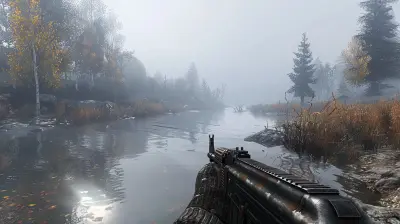
Exploring Open Worlds in Unreal Engine’s Most Stunning Titles
22 May 2026
If you’ve ever lost yourself in a vast, beautifully rendered open-world game—the kind where the environment feels alive, immersive, and downright jaw-dropping—chances are, Unreal Engine played a huge part in bringing that world to life. From the gentle sway of trees to the sweeping mountains off in the distance, Unreal Engine has steadily become the gold standard in open-world game development.
In this post, we’re diving headfirst into the best open-world experiences created using Unreal Engine. These aren’t just games; they’re living, breathing worlds that invite you to roam, explore, and interact—each crafted with a jaw-dropping level of detail. Ready to explore some next-level virtual landscapes? Let’s go.
Why Unreal Engine is Perfect for Open Worlds
Before we geek out over individual titles, let’s talk about why Unreal Engine is such a powerhouse for creating open worlds.Advanced Rendering Power
Unreal Engine isn’t just popular because it's flashy. Its lighting systems (especially with the introduction of Lumen in UE5), environmental effects, and real-time rendering capabilities are on another level. It can handle sprawling vistas, dynamic weather, and minute details, all at once.Scalability for Massive Worlds
Whether you're exploring a tiny village or an entire continent, Unreal's system scales easily. Developers can load and unload assets dynamically depending on where the player is, which means massive games don’t have to sacrifice performance for size.Blueprint System
Not every dev is a master coder, and that’s okay. Unreal’s blueprint visual scripting system lets creators build complex gameplay mechanics without diving deep into code. That makes it easier to focus on storytelling and exploration—two pillars of a good open-world game.
Unreal Engine Open Worlds That Will Blow Your Mind
Alright, now for the fun part. Let’s take a look at some of the most jaw-dropping open-world games made with Unreal Engine. These aren’t just great games—they’re digital masterpieces.1. Red Dead Redemption 2 (PC Build Uses Elements of Unreal)
Even though Rockstar uses its proprietary RAGE engine, the PC version of Red Dead Redemption 2 incorporates tech similar to Unreal’s tools and integrates aspects that show what Unreal-style rendering can look like in open worlds. The result? A visually stunning, emotionally resonant, and incredibly detailed American frontier.You can ride for hours across prairies, mountains, and deserts, encountering wildlife, dynamic weather, and NPCs going about their lives. It doesn’t feel like a game world—it feels like a world, period.
2. The Outer Worlds (Unreal Engine 4)
From Obsidian Entertainment, The Outer Worlds is a narrative-rich sci-fi RPG set across multiple planets. It might not be as massive as some titans in the genre, but what it lacks in size it makes up for in style.Each environment oozes personality—from toxic alien landscapes to bustling futuristic colonies. Thanks to Unreal Engine 4, the game pulls off fantastic lighting and textures that make space exploration feel vibrant and fresh.
3. Days Gone (PC Port on Unreal Engine 4)
Originally designed with Sony’s Bend Studio’s proprietary engine, Days Gone was ported to PC using Unreal Engine 4, and wow—what a difference it made. The detail in Oregon’s lush forests, snowy mountains, and creepy abandoned towns has never looked better.From swarms of zombies (Freakers) to dynamic weather and a full day-night cycle, the PC version shows how Unreal can enhance realism in open-world survival titles.
4. Ark: Survival Evolved
This one's a wildcard. Ark is far from polished—it’s buggy and chaotic—but it’s also ambitious as heck. Built with Unreal Engine 4, Ark throws you into a prehistoric world filled with dinosaurs, strange tech, and other players.The scope is enormous. You’re free to build, tame creatures, and survive in a sandbox where anything can (and usually does) go wrong. For a game this big and goofy, the visual fidelity is surprisingly solid thanks to Unreal’s capabilities.
5. Hogwarts Legacy (Unreal Engine 4)
This one hits the nostalgia button hard. Hogwarts Legacy lets you live out your fantasy of receiving a letter from Hogwarts and exploring every nook and cranny of the magical universe.Using Unreal Engine 4, developers crafted a world that’s both faithful to the Harry Potter lore and visually stunning on modern systems. The lighting in the Great Hall, the moody atmosphere in the Forbidden Forest, even the small glow of a wand—it’s immersive as heck.
6. Atomic Heart (Unreal Engine 4)
Talk about style. Atomic Heart is like if BioShock had a baby with a fever dream. Set in an alternate history USSR, this game uses Unreal Engine to render incredibly surreal environments—from lush natural settings to sterile laboratories filled with weird tech.It’s creepy, it’s gorgeous, and it handles open environments with the smooth fidelity that Unreal is known for. The reflective surfaces, particle effects, and lifelike textures all scream next-gen.
7. S.T.A.L.K.E.R. 2: Heart of Chernobyl (Unreal Engine 5)
Now we're talking next-gen open-world insanity. S.T.A.L.K.E.R. 2 is being built in Unreal Engine 5, and man, the early footage is mind-blowing. We're talking hyper-detailed post-apocalyptic wastelands, dynamic lighting that feels moody and real, and an atmosphere so thick you could cut it with a knife.UE5's tools like Nanite (for rendering ultra-high detail assets) and Lumen (for dynamic lighting) are being fully utilized to create a deeply immersive environment that reacts to your every move.
How Unreal Engine 5 is Changing the Open-World Game
With each new version of Unreal Engine, the bar gets raised. UE5, in particular, is a game changer, and here's why.Nanite and Lumen – The Dream Duo
Nanite allows for mind-blowing detail without hammering your system’s GPU. Basically, worlds can contain billions of polygons without killing performance. Lumen, on the other hand, gives real-time dynamic lighting that reacts to the environment.Together? They make open worlds look like cinematic masterpieces.
World Partition System
Old open-world engines had to “stream” parts of the world as you moved around. UE5’s World Partition system breaks the world into a grid and only loads the parts you need. It’s seamless, and you can feel the difference. No more loading screens when transitioning between areas.Easier Collaboration
UE5 allows multiple developers to work on the same part of the world at the same time. That means open worlds can be built faster, with richer detail and fewer bugs.
What Makes a Great Open World?
Sure, having good graphics helps. But what really makes an open world shine?- Interactivity – Can you do more than just look around? A good world invites you to touch, alter, and interact with its elements.
- Storytelling Through Environment – Some games tell stories without saying a word, just through the visuals. That’s the magic of environmental storytelling.
- Atmosphere – Lighting, sound, and detail combine to give a place its “vibe.”
- Freedom – Players need to feel like they have control. Want to follow the story? Cool. Want to ride in the opposite direction just to see what’s out there? Even better.
Unreal Engine nails all of the above, giving developers the tools to make worlds you not only play in but remember for years.
Final Thoughts: The Power of Unreal Worlds
Look, video games have come a long way since the days of pixelated characters hopping across flat backgrounds. Today, we’ve got living, breathing virtual worlds that are so detailed, you can almost smell the rain on cobblestone streets or feel a cold wind rush through a snowy mountain.And a lot of that progress? It's thanks to Unreal Engine.
Whether you're riding a horse across a sprawling prairie, cautiously creeping through a radioactive wasteland, or casting spells in the halls of Hogwarts, there’s a beauty in these open worlds that you can’t shake. Unreal Engine gives artists, developers, and storytellers the brush and canvas to create these masterpieces.
So next time you boot up a game and think, “Wow, this world is insane,” just remember: Unreal made it real.
all images in this post were generated using AI tools
Category:
Unreal Engine GamesAuthor:

Leif Coleman
Discussion
rate this article
2 comments
Niva Jacobs
Unreal Engine continues to push the boundaries of open-world design, delivering immersive experiences with stunning visuals. The attention to detail and expansive environments truly elevate gameplay to new heights.
July 3, 2026 at 3:27 AM
Leif Coleman
Thanks for the feedback! Unreal Engine really does set a high bar for open-world design. Glad you enjoyed the article!
Vivian McAlister
Great read! Open worlds in Unreal Engine truly immerse players like no other. Can't wait to see which titles push the boundaries even further in the future... Keep exploring!
May 27, 2026 at 4:03 PM
Leif Coleman
Thank you! I'm excited too about what the future holds for open worlds in Unreal Engine. There's so much potential for innovation!