Exploring the Cognitive Benefits of Puzzle Games
17 July 2026
Let’s be honest — who hasn’t lost hours of their day trying to solve a tricky Sudoku puzzle or getting addicted to a color-matching mobile game without even realizing it? Puzzle games are sneaky like that. But here’s the kicker — while you’re immersed in matching shapes or solving riddles, your brain is actually getting a pretty solid workout. Yep, your gray matter is leveling up!
So let’s dive into the mental magic behind puzzle games and how they’re more than just fun distractions. You might be surprised to find out just how powerful these games can be for your mind.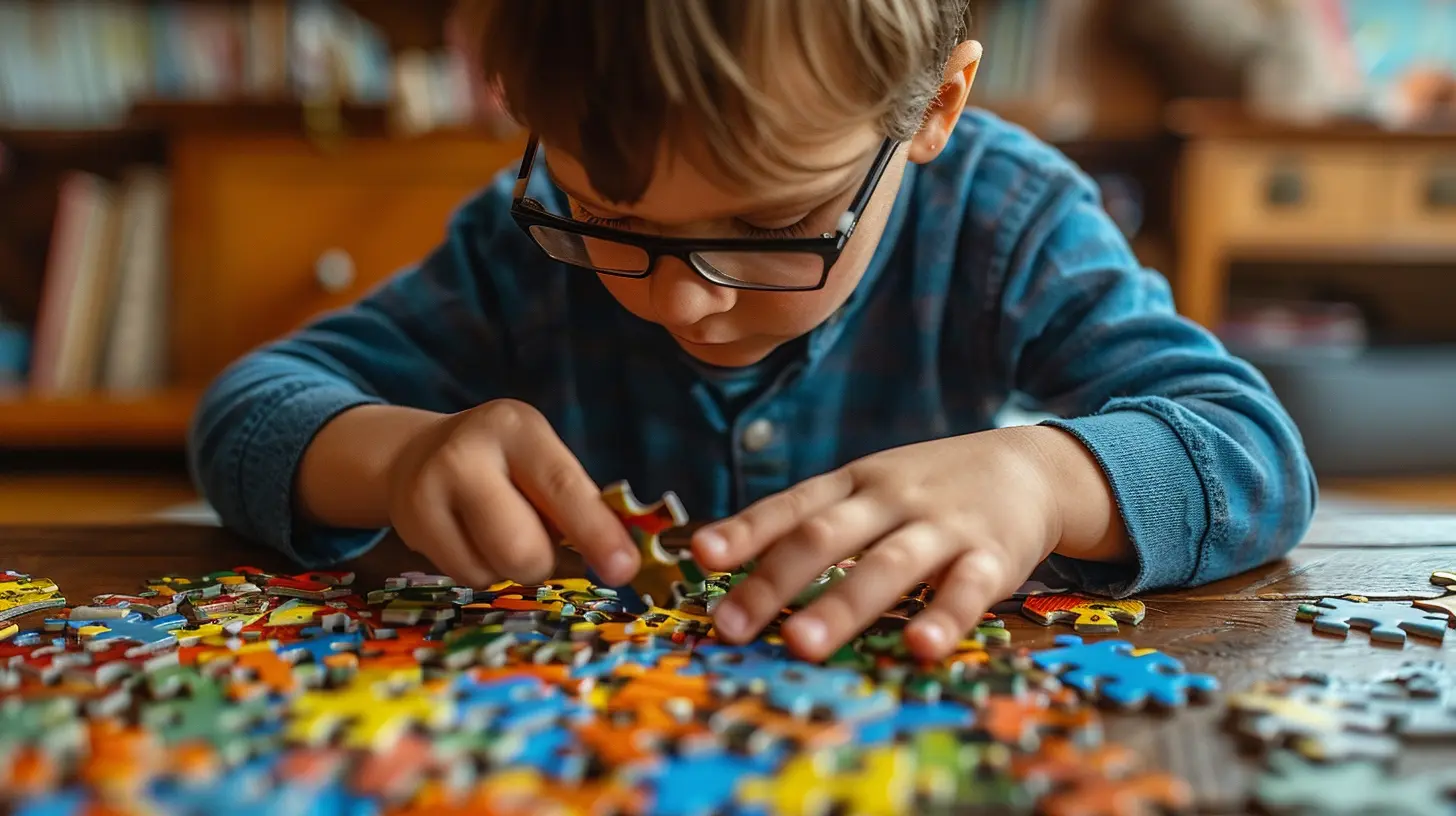
? Puzzle Games: More Than Just Time-Killers
Think of puzzle games as the gym for your brain. Just like weightlifting builds muscle, solving puzzles can strengthen your cognitive functions. From classic crosswords and jigsaws to modern hits like Tetris, Portal, and The Witness, puzzle games push your mental gears into motion.Don’t believe me? Let’s dig into the brain-boosting benefits.
? Boosting Problem-Solving Skills Like a Boss
Every puzzle has a problem. And guess what? You’re the one who has to fix it.When you’re playing puzzle games, especially ones that ramp up in difficulty as you go, your brain is learning how to assess a situation, spot patterns, strategize, and test solutions without giving up. These are the same skills you'd use in real-life challenges — like figuring out how to organize your week, handle surprise work problems, or even cook a meal with leftover ingredients. It’s all about thinking outside the box.
Games like Portal 2 make you think in three dimensions, forcing you to strategize and even anticipate outcomes. That kind of forward thinking? Super valuable.
? Improving Memory, One Piece at a Time
Puzzle games are like memory supplements — but way more fun and without the bitter taste.Whether it’s remembering where that odd-shaped piece goes in a jigsaw or recalling that password from the first room of an escape game, you're constantly calling on your short-term and working memory. And the more you use it, the better it gets.
Studies show that regularly engaging in brain-challenging games can actually help maintain memory as we age. That’s huge, especially with things like dementia on the rise. So yeah, your weekly crossword habit might actually be saving your future self’s memory.
? Sharpening Focus and Attention Span
Let’s admit it: It’s hard to focus in a world of constant notifications and endless scrolling.Puzzle games force you to switch gears and lock in. Especially complex puzzles like The Talos Principle or even a good old Rubik’s cube — they demand your full attention. There’s no room for half-hearted effort if you want to complete the level.
This kind of attention to detail improves your overall concentration. Eventually, this mental discipline spills over into other parts of your life — like focusing during meetings or staying zoned in on tasks at work or school.
?♂️ Reducing Stress and Boosting Mood
Hear me out. Puzzles can be a form of meditation.They give your brain something to focus on that isn’t stressful or overwhelming. That calming sense of “flow” you get when you’re deep into a Sudoku grid or matching tiles in Candy Crush? That’s a form of mindfulness.
Plus, there’s a dopamine hit every time you crack the code or clear the board. That’s your brain’s way of saying, “Well done, champ!” It boosts your mood and gives you a small sense of achievement — which we could all use more of, right?
? Enhancing Spatial Reasoning
Ever tried to fit a piece into a puzzle and turned it like, ten different ways before it clicked? Or played Tetris and had to mentally rotate shapes on the fly? That’s spatial reasoning at work.Puzzle games improve your brain’s ability to visualize and manipulate objects, which is super handy in real life. Think packing a car trunk, finding your way through a city, or even assembling IKEA furniture — thank you, puzzle games!
?️ Language and Vocabulary Development
Not all puzzles are visual. Word-based games like crosswords, Scrabble, and Wordscape stretch your vocabulary and linguistic skills.And the best part? You often pick up new words without even trying. It’s like learning by osmosis. If English isn’t your first language, word puzzles can dramatically speed up your language comprehension and spelling. It's playful learning at its best.
? Strengthening Logical and Analytical Thinking
Logic puzzles are like brain bootcamp. Think Minesweeper, Picross, or even nonograms — these games sharpen your ability to analyze, deduce, and make informed decisions.You learn to eliminate false leads, test theories, and adapt your thinking when things don’t go as planned. Honestly, the scientific method could learn a thing or two.
And let’s not sleep on the real-world application of these skills. Analytical thinking is gold for jobs, finances, relationships — everything.
? Cognitive Flexibility and Adaptability
Ever started a puzzle and realized you were going about it all wrong?Puzzle games reward experimentation and adapting to new situations. You come in with a theory, test it, fail, then try something else. That mental flexibility is crucial in everyday life — especially in fast-paced or unpredictable situations.
Games like Baba Is You literally change the rules of gameplay as you go, forcing you to adjust your mindset constantly. It’s frustrating at first, but man, is it rewarding when you figure it out.
? Puzzle Games in the Digital Age
Let’s face it, most of us are playing our games on mobile or PC these days. And the good news? You’ve got puzzle heaven right in your pocket.Mobile games like Brain Out, Lumen, Monument Valley, and Two Dots are designed to be both engaging and mentally stimulating. They're bite-sized but brain-rich.
Plus, playing puzzle games on the go means you can turn your boring commute or lunch break into a brain-training session. No gym membership or fancy gear required.
? Puzzle Games for All Ages
What’s amazing about puzzle games is how ageless they are. Kids, teens, adults, and seniors — everyone can find value in them.For kids, puzzles help build foundational skills in shape recognition, coordination, and problem-solving. Educational apps and games gamify learning in such a smart way.
For adults, puzzles are fantastic for keeping the mind sharp amid busy schedules. And for seniors, they can offer cognitive stimulation that wards off age-related decline.
Regardless of where you sit on the age spectrum, puzzle games are a smart choice.
? Genre-Crossing Puzzle Games You Should Try
If you’re just thinking of puzzles as number games and crosswords, you're missing out! Modern puzzle games cross into adventure, storytelling, and even horror.- The Witness: A gorgeous, island-based first-person puzzle game where every puzzle ties into the environment.
- Portal & Portal 2: Mind-bending physics puzzles with a twist of humor.
- Baba Is You: A rule-bending logic game where you quite literally rewrite the game's code to win.
- Monument Valley: Escher-style masterpieces of optical illusion.
- Catherine: A puzzle-platformer with deep psychological themes.
These games are works of art and brain challenges rolled into one.
? Puzzle Games and Brain Health: What the Science Says
You might be wondering — is this all just fun and anecdotes? Nope. Scientists are into this too.Research from sources like the Journal of Cognitive Neuroscience has found that regularly playing puzzle games can improve brain plasticity (how adaptable your brain is), visual reasoning, and memory recall. Long-term studies even hint at reduced risks of Alzheimer’s and cognitive decline in puzzle-loving seniors.
So no, it’s not just wasting time. You're literally future-proofing your brain.
? Final Thoughts: Gamify Your Brain Gains
Here’s the deal. In a world where things change fast and attention spans are shrinking, puzzle games offer a rare combo: fun and functional. They entertain, educate, and empower your brain to work smarter, faster, and longer.Next time someone says you’re “just playing games,” smile and let them know you’re actually sharpening your mental sword. Whether it’s solving a Rubik’s cube, untangling a riddle, or matching dots on your phone, every brain-teasing moment counts.
So go ahead — grab that puzzle. Your brain will thank you later.
all images in this post were generated using AI tools
Category:
Educational Value Of GamesAuthor:

Leif Coleman
Discussion
rate this article
2 comments
Paris McNeil
Puzzle games are more than just fun; they sharpen our minds, boost problem-solving skills, and enhance memory. Engaging with these challenges can lead to lasting cognitive improvements. A win-win for gamers!
October 3, 2026 at 3:19 AM
Galina McKnight
While puzzle games enhance problem-solving skills, overreliance on them may hinder real-world cognitive flexibility.
July 19, 2026 at 4:59 AM
Leif Coleman
That's an interesting perspective. Balance is key; puzzle games can boost skills, but real-world application is vital too.