How Games Are Being Used in Higher Education
19 April 2026
Alright, let’s kick things off with a question: when was the last time you played a game just to learn something? If your answer is “uh... never?” or “when I was five, does Candy Land count?”, you’re not alone. For the longest time, games have been pegged as just a way to kill time or dodge responsibilities. But folks, the tides are turning. Yep, in lecture halls, study rooms, and even virtual classrooms, games are shaking things up — and higher education is loving it.
So buckle in, because we’re diving into a world where textbooks meet quest logs, where professors wield joysticks, and GPA boosts come with level-ups. Here's everything you didn’t know you needed to know about how games are being used in higher education.
? The Rise of Game-Based Learning (GBL): Not Just Child’s Play
Let’s clear something up right away: we’re not just talking about playing Mario Kart in the student lounge anymore (although we highly recommend that too). Game-Based Learning (GBL) is a legit educational strategy where games are used as tools to teach, reinforce, and apply academic concepts. And guess what? It's not just for elementary schools anymore.Colleges and universities are catching on, realizing that Generation Z — and soon Generation Alpha — have grown up in a world where games are second nature. These students don’t just learn by reading or lectures. They learn by doing, exploring, experimenting — all things games are perfect at.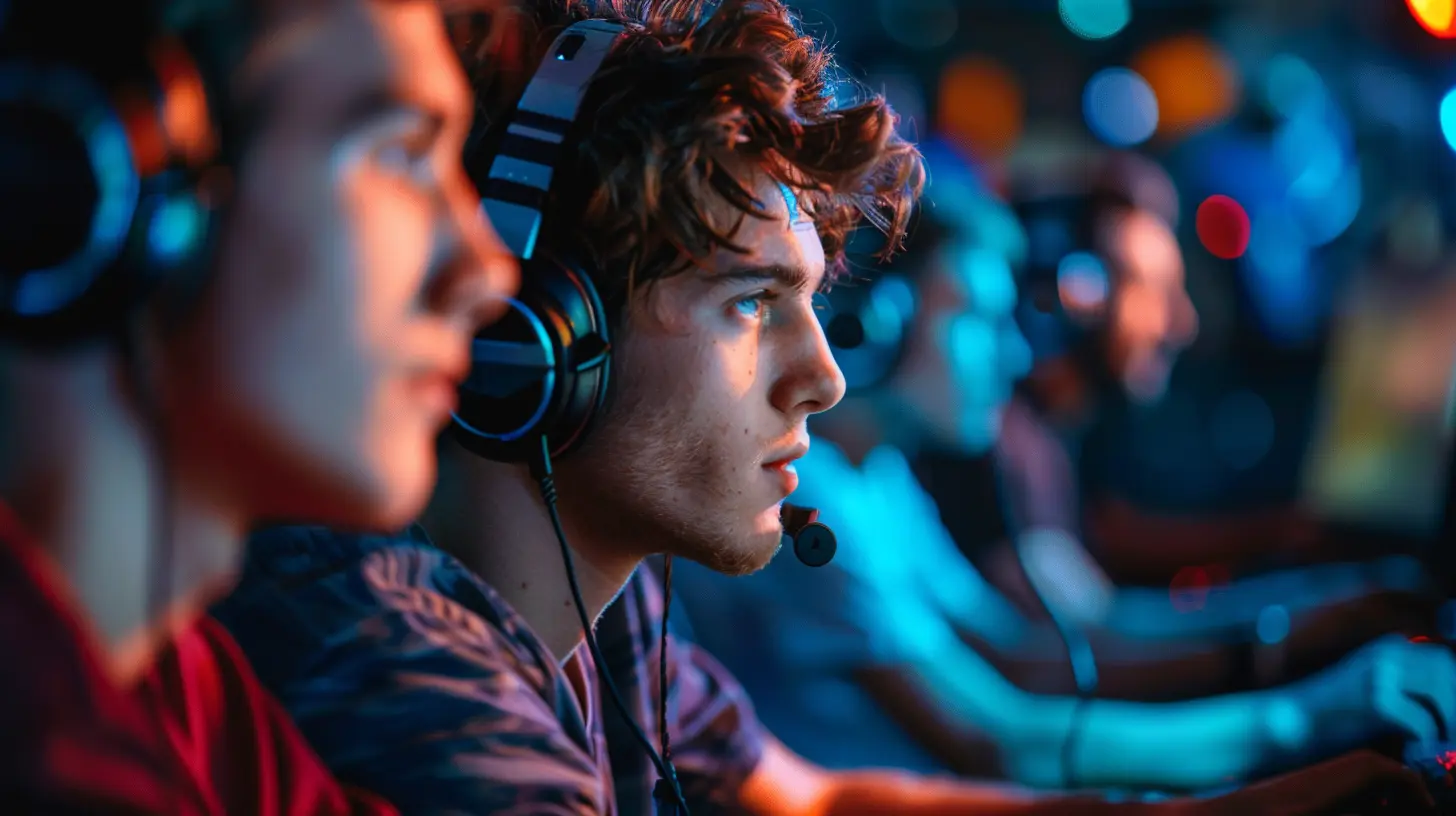
? Why Games Work in Education (Spoiler: They're Brain Candy)
Okay, so what makes games such effective teaching tools? Think about this:- Games offer instant feedback. You make a move and get a result. Boom. No waiting for that midterm grade.
- Games encourage persistence. Fail a level? Try again. No shame, no penalty. Just more determination.
- Games are immersive. You don’t just read about ancient Rome — you live in it, solve mysteries in it, build stuff there.
- Games fuel motivation. Ever played a game “just one more time” for an hour straight? Imagine that energy channeled into quantum physics!
Games tick off pretty much every box on the Good Learning Checklist. Oh, and did we mention they’re fun?
? Smashing Stereotypes: Games in the College Classroom
When people think “games” and “school,” most still picture kindergarten iPad apps or bored kids dodging algebra homework. But in today’s higher ed scene, we’re seeing games pop up in some seriously unexpected places.? Computer Science: Building Worlds While Building Skills
This one’s a no-brainer. In CS courses, students are literally developing their own games — learning programming, design, testing, and storytelling all in one go. It’s practical, it’s creative, and honestly? It’s pretty dang hard.Plus, they’re working with real-world engines like Unity and Unreal, the same tools used in actual game studios. Translation? They're learning job-ready skills and having a blast.
? History and Political Science: Time Travel With a Purpose
Remember memorizing dates and treaties with the enthusiasm of a wet sponge? Say goodbye to that. Now, some profs are using strategy games like Civilization to simulate historical events, letting students experiment with cause and effect in a (virtual) low-stakes setting.Want to rewrite World War II? Try it. Curious how diplomacy works when resources are low? Roll the dice, make them deals, and see what happens.
? Medicine and Nursing: Simulations That Save Lives
Games in med school? Oh yeah. Picture high-pressure emergency room simulations, but in a game setting. Students make split-second decisions that shape patient outcomes. It’s serious practice, without the actual blood.Games like "Pulse!!" and "Body Interact" are being used in nursing, anatomy, and emergency medicine courses to provide immersive, repeatable experiences where students can learn — and fail — safely.
? English and Language Studies: Leveling Up in Literacy
Ever tried learning a new language from a textbook? Snoozefest. But toss some game mechanics into the mix — points, timers, leaderboards — and suddenly you’re actually excited to conjugate verbs.Some creative professors are even incorporating narrative games into literature classes. Instead of just reading a novel, students live the narrative, making choices that alter outcomes and reflect on themes like morality, agency, and consequence.
? The Power of Gamification: Not Quite Games, Still Totally Fun
Alright, let’s zoom in on one important distinction: game-based learning involves actual games. Gamification, on the other hand, takes elements of games (like scoring, levels, or challenges) and smashes them into traditional learning setups.Think of it like this: turning your syllabus into a quest log? That’s gamification. Giving bonus XP for extra credit? Gamification. Using a leaderboard to show who’s crushing the class? You guessed it — gamification.
Gamification’s main superpower? It jazzes up boring stuff. Suddenly, doing your homework isn’t just a chore — it’s a mission to earn enough XP to unlock the final exam boss battle. Motivation skyrockets, procrastination takes a backseat, and students actually want to participate.
? Real-World Case Studies: Proof That It Works
Still skeptical? Let’s talk receipts. Here are a few universities leading the charge:1. University of Wisconsin-Madison
They introduced “The Artemis Project,” a sci-fi alternate reality game where students hunted down interdimensional threats to learn about research methods. The result? Students were way more engaged and retained more information.2. Massachusetts Institute of Technology (MIT)
Yeah, the tech brainiacs. MIT has been running games like “The Education Arcade” — where games are used to analyze real societal problems. It's like SimCity, but you're fixing real-world issues with theoretical solutions.3. University of Texas Medical Branch
This one’s all about simulations. Their nursing program uses VR and digital games to simulate patient interactions, increasing empathy, decision-making, and knowledge retention.These aren’t fringe experiments — they’re changing the game (pun so intended) for higher education.
⚙️ The Tech Behind the Magic
Let’s talk ingredients. What’s making this whole gaming-in-education thing possible?- VR and AR: Virtual and Augmented Reality make it possible to walk through Roman ruins or dissect frogs without leaving your chair.
- Game engines: Platforms like Unity or Unreal are making it easier for educators to create custom learning games.
- Learning Management Systems (LMS) with game features: Tools like Moodle and Canvas now let instructors add game mechanics right into the course interface.
Throw in the recent boom in AI and machine learning, and we're looking at a future where adaptive, custom-designed games target exactly what each student needs to learn. Mind = blown.
? Challenges Ahead (Because Nothing's Ever Perfect)
Okay, let’s be real. As cool as games in education sound, there are hurdles. A few big ones:- Cost and accessibility: Not every school has the budget for fancy VR rigs or custom games.
- Instructor training: Not every professor is ready to become a dungeon master overnight.
- Balance: You’ve gotta ensure that the game doesn’t overshadow the learning. Fun is great, but learning is the goal.
But even with these speed bumps, the potential is too enormous to ignore. We're riding a wave of innovation that’s only picking up steam.
? The Future Looks... Geeky (In the Best Way Possible)
As colleges keep adapting to the needs, habits, and interests of new generations, games are only going to get more central to the learning process. Imagine a future where:- Every course has a companion game.
- Exams are replaced with immersive simulations.
- Class discussions happen inside a shared virtual world.
Yeah, it's wild. But also incredibly possible.
? Final Thoughts: Let’s Stop Pretending Games Are Just “Play”
Look. Games are fun — no one's arguing that. But they’re also powerful engines of learning, engagement, and growth. They teach you to fail gracefully. To explore and experiment. To think critically, make choices, and adapt.In a world that needs more flexible, creative, and driven learners, isn’t that exactly what education should be aiming for?
So next time someone tells you games have no place in academia, just smile and ask: You ever try surviving an economics final while managing resources during a zombie apocalypse?
Let the games begin.
all images in this post were generated using AI tools
Category:
Educational Value Of GamesAuthor:

Leif Coleman
Discussion
rate this article
2 comments
Sadie McDougal
Great article! It's fascinating to see how games are transforming higher education. They not only make learning more engaging but also help students develop critical skills. Excited to see how innovative educators continue to integrate gaming into their teaching strategies! Keep up the awesome work!
April 27, 2026 at 4:25 AM
Leif Coleman
Thanks so much! Thrilled you enjoyed it. The potential is huge—excited to see where educators take it next.
Shania Turner
Games enhance engagement and learning, but accessibility remains a challenge.
April 19, 2026 at 5:11 PM
Leif Coleman
Absolutely, while games can boost engagement and learning, we need to prioritize accessibility to ensure everyone benefits.