How Games Inspire a Passion for Science
8 February 2026
Let’s be real—most of us didn't fall in love with science because of dull textbooks or hour-long lectures (no offense, teachers). More often than not, it was something unexpected. Maybe it was a spark from a cool science experiment in class… or maybe, just maybe, it started with a video game.
It might sound far-fetched, but stick with me. The truth is, games do a lot more than just entertain. They can open our minds, spark curiosity, and trigger a hunger to understand the world around us. Especially when it comes to science, games are quietly doing something amazing—they’re making it fun. And when something’s fun, we want more of it.
Let’s break it down and see how games are lighting a fire in players and turning curiosity into a full-blown passion for science.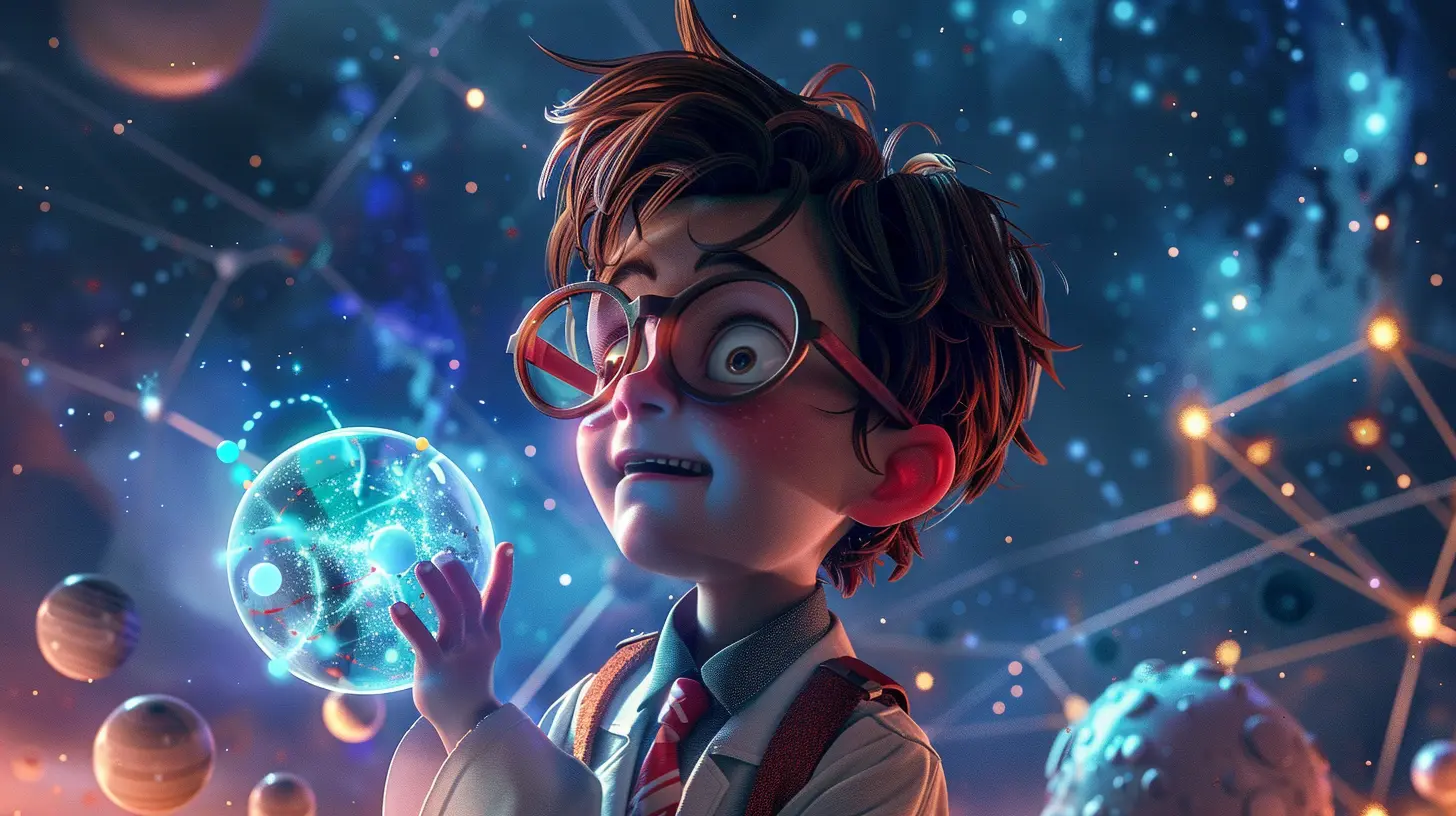
The Stealthy Science Behind Gaming
You know that “aha!” moment when you finally figure out the puzzle in a game? That little thrill? That’s science stepping in—disguised as play.Many games weave scientific principles right into their mechanics, stories, or environments. You’re solving problems, testing theories, and learning how systems work—all without a lab coat in sight.
Physics in Every Jump
Ever played Portal or Half-Life? These aren’t just epic games—they’re brain-training, physics-bending experiences. Portal, for example, makes you think spatially and logically. You’re actually learning concepts like momentum, gravity, and force. But it doesn’t feel like a dull science lesson—it feels like you’re outsmarting a robot with cake promises!Biology in the Wild
Games like Spore or Subnautica introduce you to evolution, adaptation, and marine biology in the coolest way possible. Spore lets you evolve a creature from a single-cell organism to a galactic traveler. Subnautica tosses you into an alien ocean, and suddenly you’re thinking about ecosystems, resource management, and marine survival without even realizing it.Chemistry in Chaos
Even games like Minecraft (yes, Minecraft!) subtly introduce chemical concepts. Think about potions, crafting, and resource combining. There are entire YouTube channels dedicated to using Minecraft to teach kids about the periodic table. Seriously—science teachers, take notes.
How Games Turn Curiosity Into Exploration
Here’s the thing: games are amazing at one special skill—getting us curious. Really curious. You want to know what’s behind that locked door, how to build a faster spaceship, or why certain creatures only come out at night.And once that curiosity kicks in, the real magic begins.
The Power of Interactive Learning
Let’s compare reading about gravity in a textbook vs. playing a game where gravity changes in each level. Which sticks better?Games let you do rather than just read. That’s hands-on learning—and studies show it works way better for most people. You remember what you experience. And when games mimic scientific experiments, they’re essentially teaching you the scientific method in disguise: form a hypothesis, test it, observe results, adjust, repeat.
Puzzles = Problem Solving = Scientific Thinking
Games are full of puzzles. Whether it’s a riddle in The Legend of Zelda, optimizing a city layout in Cities: Skylines, or surviving off limited resources in Oxygen Not Included, you’re exercising your brain the same way scientists do.You’re not just guessing—you’re thinking critically, making connections, and learning from failure. Isn’t that what science is all about?
When Storytelling Meets Science
Ever notice how some games make you feel smart? That’s because they blend storytelling with science so beautifully you don’t even realize you’re learning.Games That Make Science Emotional
Take a game like Outer Wilds. You explore a solar system stuck in a mysterious time loop, learning about quantum physics, astronomy, and time travel. It’s not a lecture—it’s a love letter to discovery. You're not just reading about black holes. You're falling into one, watching time react, and thinking, “Oh wow, that's how it works!”These stories give scientific concepts emotional weight. They make you care. And when you care? You investigate deeper—even after the credits roll.
Roleplaying as the Scientist
Who hasn’t dreamed of being a genius inventor, a rogue astronaut, or a quirky alien biologist? Games let us live those dreams.Becoming the Expert (Even If You’re Not One Yet)
In games like Kerbal Space Program, you’re literally launching rockets into space. At first, you fail a lot. But eventually, you start understanding velocity, fuel mechanics, orbit paths. Before you know it, you’re not just sending Kerbals to the moon—you’re learning real NASA-level stuff.It’s sneaky education at its finest.
Simulation Games = Science Labs for the Rest of Us
Simulators like Planet Zoo teach you animal biology and habitat needs. Farming games like Stardew Valley subtly hint at crop science, weather systems, and soil quality. Even Jurassic World Evolution teaches genetics and conservation (plus, dinosaurs—enough said).These games don't just hand you information—they make you experiment and get your hands dirty (virtually, of course). Scientists in training, anyone?
Community and Collaboration: The Science Behind Multiplayer
Science isn’t just done solo. And neither are most games these days.Learning Together
Online cooperative games like Minecraft, Ark: Survival Evolved, or even Factorio encourage players to share knowledge, test ideas, and build together. Sounds a lot like a scientific community, right?Players go online to share how to automate systems, optimize production chains, or discover new wildlife species. It’s a beautiful mess of creativity and collaboration—just like real-world science.
Modding Culture = Citizen Science
Let’s talk mods for a second. Modding not only involves coding and design (skills rooted in logic and mathematics), but it also pushes players to ask: “How can I make this better?” or “Can I change the rules?” That’s the spirit of innovation.Some players even build real scientific simulations within games. It’s like turning your PC into a mini-CERN.
Real Stories, Real Passion
This isn’t just feel-good theory. There are real stories of people who started their science careers because of games.From Gamer to Scientist
Search online and you’ll find tons of testimonies: people who pursued degrees in physics after playing Portal, or who got into astronomy thanks to No Man’s Sky.Even Elon Musk admitted games like Civilization and sci-fi novels inspired his early curiosity in the universe. Games can plant seeds that grow into something way bigger than a high score.
The Classroom Is Changing (And Games Are Welcome)
More and more educators are embracing games as teaching tools. And why not? If kids are already into it, why not use that enthusiasm to teach science?Games in Education
Teachers are using all kinds of science-based games in classrooms now—from online chemistry simulators to gamified biology lessons. Some schools even offer esports and game-based learning programs.Gamification makes boring concepts engaging. Imagine learning genetics through building creatures in a game instead of memorizing Punnett squares. Sounds way more fun, right?
Final Thoughts: Game On, Science Nerds
So, the next time someone says games are a waste of time, you can confidently say, “Actually, they’re feeding my inner scientist.”Games aren’t just escape hatches from real life—they’re gateways to deeper understanding. They stoke curiosity, teach through doing, and turn every player into a budding explorer or problem-solver.
Whether you’re piecing together alien languages, constructing a particle accelerator, or simply farming apples with precision, games are nudging you closer to science—all with a smile on your face and a controller in your hand.
So go ahead. Play. Think. Tinker. You never know where that spark might lead.
all images in this post were generated using AI tools
Category:
Educational Value Of GamesAuthor:

Leif Coleman
Discussion
rate this article
3 comments
Aleta McGuffin
This article brilliantly highlights the intersection of gaming and science. By illustrating how games spark curiosity and engagement in scientific concepts, it showcases the potential of interactive media to inspire the next generation of scientists. An insightful read for educators and gamers alike!
April 25, 2026 at 3:17 AM
Leif Coleman
Thanks for the kind words! I'm glad the article resonated with you and highlighted the exciting link between gaming and science.
Erin McKittrick
Games spark curiosity and ignite scientific passion.
February 10, 2026 at 6:05 PM
Leif Coleman
Absolutely! Games engage players in hands-on experiences that foster exploration and creativity, making science exciting and accessible.
Eli Sanders
Games ignite curiosity and creativity, transforming complex science into engaging adventures! Let’s celebrate how they inspire future innovators and ignite a lifelong passion for discovery!
February 9, 2026 at 4:57 AM
Leif Coleman
Absolutely! Games are a powerful tool for making science accessible and fun, fostering curiosity and creativity in young innovators.