How Strategy Games Teach Planning and Foresight
14 April 2026
You know that moment in a strategy game when you're three moves deep, have a growing city, a well-fed army, and you're thinking, "Yep, I got this"? And then—bam! Your opponent outflanks you because they were ten moves ahead while you were admiring your digital empire. Yep, that’s strategy gaming in a nutshell: a glorious dance of planning, plotting, and "how the heck did I not see that coming?"
But here's the kicker—those late-night Civilization marathons and “just one more turn” sessions aren’t just fun (though we both know they totally are). They’re doing your brain a favor. Strategy games aren't just about clicks and conquest; they’re like mental boot camps for planning and foresight.
Let’s break it down—light-heartedly and with plenty of relatable gaming references—how strategy games secretly turn you into a mastermind (or at least someone who can plan dinner without setting off the smoke detector).
The Strategic Playground: What Qualifies as a Strategy Game?
First things first. What even counts as a strategy game? Think of titles like:- Civilization VI (because managing an entire civilization is casual, right?)
- StarCraft (Zerg rush, anyone?)
- Total War series
- Age of Empires
- XCOM (where every missed 95% shot haunts your dreams)
- Into the Breach
These games require players to think, make decisions based on a bigger picture, and adjust strategies as new information slaps them in the face.
Whether it’s turn-based or real-time, the core value of a strategy game lies in—you guessed it—strategy! Planning, managing resources, anticipating moves, and making judgment calls under pressure.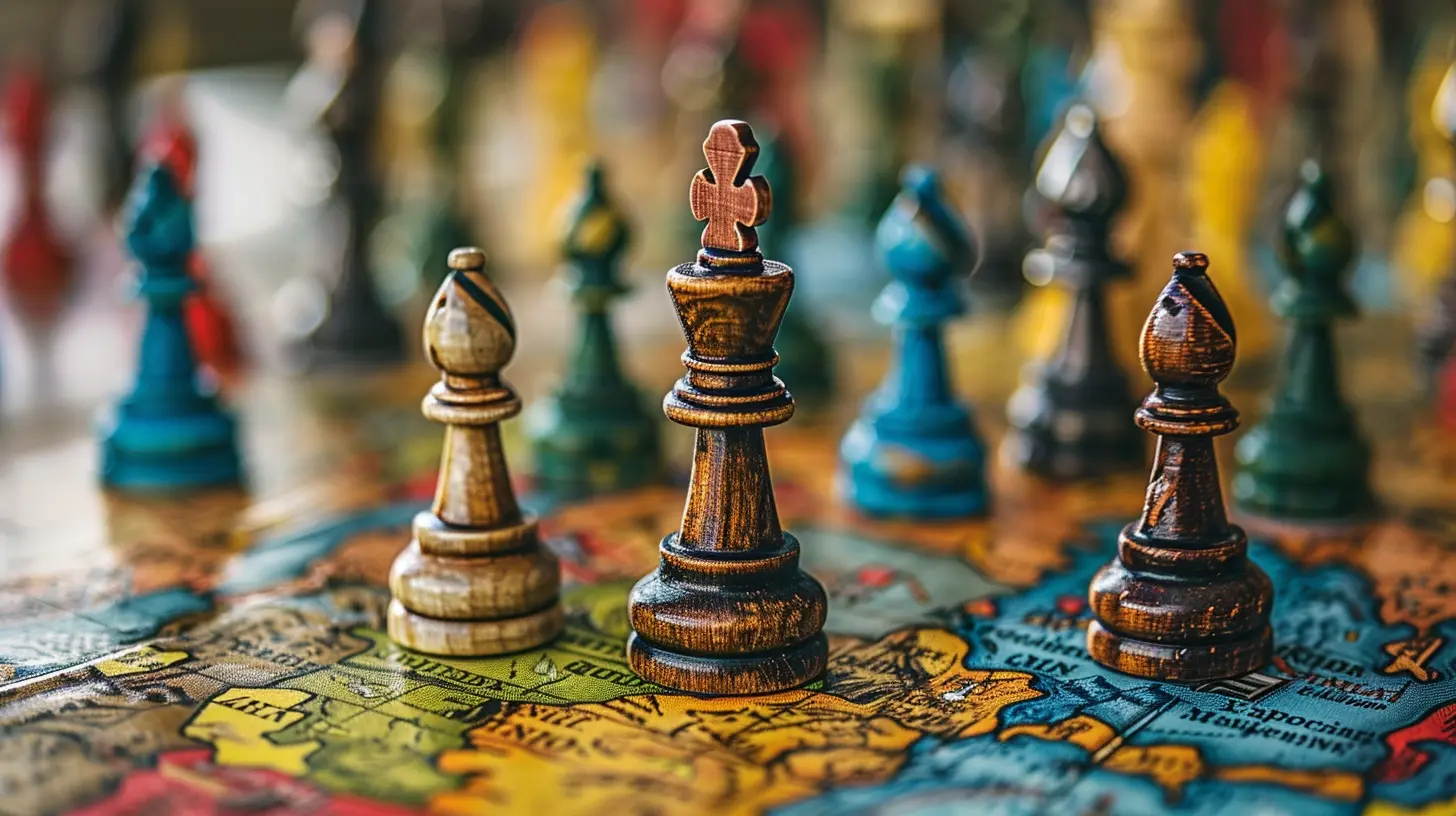
Why Planning and Foresight Matter (In Games and Real Life)
So, why do we even care about planning and foresight? Well, unless you enjoy your daily life feeling like a last-minute boss battle, you already know the value.In games, poor planning costs you units... or cities... or literally your entire civilization. In real life? It might cost you your budget, opportunities, or a night of peaceful sleep.
Foresight is that mental crystal ball that helps you predict what could happen based on what’s happening now. It’s like chess, but instead of pawns and rooks, you're juggling job interviews, grocery shopping, and whether or not to hit snooze for the third time.
Level 1: Understanding the Power of Long-Term Thinking
Ever tried storming your opponent’s base too early in StarCraft? Yeah, turns out sending five marines and a dream gets you nowhere. Strategy games are brutal teachers of one truth: if you don’t think ahead, you’re toast.Long-term thinking in strategy games forces players to ask questions like:
- “If I go to war now, can I sustain it?”
- “Should I research better tech before expanding?”
- “Will this alliance bite me later?” (Spoiler: probably.)
Every action has a butterfly effect. You build too many barracks now? Your economy might suffer later. You ignore science? Your units will get outclassed faster than you can say “game over.”
This causes players to naturally start thinking in layers—short-term gains vs. long-term sustainability. It’s budgeting with swords and laser cannons.
Level 2: Learning to Adapt When Plans Go Sideways
“Everyone has a plan until they get punched in the mouth.” - Mike TysonAlso applicable: “Everyone has a strategy until Gandhi nukes them in Civ.”
One of the magical things about strategy games is how ruthlessly they force you to adapt. You draft a flawless plan—impressive, genius even—and then the AI throws curveballs like betrayal, rebellion, or... Gandhi with nukes. Your plans crumble, and you either improvise or perish.
This teaches flexibility. You start to anticipate unpredictable scenarios. You develop contingency plans without even realizing it. It’s like becoming the MacGyver of medieval warfare or alien invasions.
See? These games practically hand you life skills on a pixelated platter.
Level 3: Managing Resources Like a Boss
Fun fact: being broke in Civilization feels eerily similar to real life. Your units start revolting, your cities stop producing, and you think, “How did I not see this coming?”Strategy games teach you to manage your resources like a financial wizard. Whether it’s wood, gold, population happiness, or energy crystals from the 5th dimension, every resource demands your attention.
You learn to:
- Prioritize spending
- Save for future upgrades
- Avoid overproduction
- Balance short-term necessity with long-term efficiency
Play enough strategy games, and suddenly budgeting isn’t scary—it’s second nature.
Level 4: Enhancing Risk Assessment
Risk is the spicy salsa of strategy games. Without it, things get bland. But pile on too much, and your whole empire burns because you thought you could take on three enemies at once.In Risk (the actual board game or just metaphorically), moving into a new territory seems like a small decision, but it might unleash a chain of events that wrecks you.
Strategy games train your risk radar. You begin to weigh the pros and cons like a mini economist. "If I attack now, I could win more land... but I leave my flank open." Sound familiar?
Over time, players develop an uncanny ability to spot danger, analyze outcomes, and make decisions that balance risk and reward—all from countless digital warzones.
Level 5: Cultivating Patience and Discipline
You can’t rush greatness—or a tech tree that takes 40 turns. Strategy games reward the patient planner, the disciplined builder. The one who says, “No, I won’t build another warrior; I’ll save for the tank.”It’s like a meditation of delayed gratification. You start to love the slow build-up, the layered complexity, the quiet before the storm.
And this patience? It leaks into real life. You start tolerating slow elevators and long queues because hey, if you can wait 200 years for space flight in Civ, you can wait five minutes for coffee.
Level 6: Mastering Multitasking Without Melting Down
Ever tried managing five cities while commanding a front-line offensive and balancing diplomacy with three rival civilizations? That’s strategy gaming.Juggling dozens of things at once teaches you how to compartmentalize tasks and prioritize like a pro. You're not just clicking buttons—you’re managing complex systems under time pressure. That’s multitasking on steroids.
Real life multitasking suddenly feels more manageable. Balancing work emails, laundry, and dinner reservations? Child’s play compared to defending against a Barbarian horde.
Why This All Matters Outside the Gaming World
Let’s be real—no one's hiring based on your Age of Empires kill count (though they totally should). But the soft skills you build in strategy games are the secret sauce employers, educators, and real-life responsibilities crave.We’re talking:
- Critical thinking
- Planning and project management
- Adaptability
- Time management
- Decision-making under pressure
Whether you’re leading troops or leading a team meeting, the thought processes are shockingly similar. The digital battlefield is a training ground for the boardroom, the classroom, even parenthood (because toddlers = unpredictable AI).
Minimal Effort, Maximum Brainpower — The Sneaky Brilliance of Games
The best part? You’re learning all this without realizing it. That’s the beauty of strategy games.While you’re having a blast defeating evil empires or optimizing food production, your brain is crunching numbers, analyzing scenarios, and making high-level decisions.
It’s like hiding vegetables in a smoothie—you get the benefits without the “ugh, learning” part.
So the next time someone says, “You’re wasting time on games,” hit them with: “Actually, I’m sharpening my cognitive decision-making matrix and reinforcing my risk analysis protocols through interactive systems simulation.”
Boom. Instant respect. Or confusion. Either way, you win.
Final Thoughts: Gamify Your Brain
Strategy games are brilliantly sneaky like that friend who makes you go hiking "just for the view" (but it's actually a sweaty workout). They challenge your brain, test your patience, and stretch your logic—all while you're commanding armies or building empires.If you’re looking for a fun way to grow your strategic muscle, look no further than the games already on your shelf (or Steam library).
So go on, start a new campaign. Plan ahead, adapt quickly, and when all else fails—blame the RNG.
all images in this post were generated using AI tools
Category:
Educational Value Of GamesAuthor:

Leif Coleman
Discussion
rate this article
2 comments
Olive McTier
Embrace strategy games—they sharpen your mind and cultivate essential life skills for success!
April 19, 2026 at 5:11 PM
Leif Coleman
Thank you! Strategy games truly are powerful tools for enhancing critical thinking and decision-making skills.
Zeno Ramos
Strategy games sharpen critical thinking and future planning skills.
April 14, 2026 at 4:12 AM
Leif Coleman
Absolutely! Strategy games challenge players to think critically and plan ahead, fostering essential skills that are valuable in real-life decision-making.