RPGs That Made Us Rethink Morality
22 August 2026
Let’s be honest… Role-playing games (RPGs) are more than just hours of button-mashing, looting rare items, and grinding for XP. The best ones mess with your head—in all the right ways. They throw you into impossible situations, ask uncomfortable questions, and then force you to live with your messed up decisions. RPGs don’t just let us kill dragons—they make us stare morality right in the face and ask, “What kind of person am I, really?”
In a world where every choice echoes, the RPG genre has become a master at blurring the lines between right and wrong. Some games make morality a meter; others turn it into a full-blown existential crisis. So let’s dive in—and maybe get a little philosophical—as we unpack the RPGs that truly made us rethink what’s "good", what’s "evil", and all that morally grey stuff in between.
1. Undertale – Mercy or Murder? The Choice Is Yours… Literally
Undertale flipped the entire RPG genre on its head with one question: _Do you really have to kill anyone?_At first glance, it looks like an 8-bit love letter to classic RPGs. Cute graphics, quirky dialogue, monster fights… you know the drill. But then it hits you with that game-changing mechanic: Every enemy, every boss, can be spared. Not defeated. Spared. As in, you can talk your way out of battles, comfort crying skeletons, and even date a fish-woman if you play your cards right.
But here’s where it gets spicy. The game remembers. If you kill someone—even by accident—it’s not just a stat tweak. The game judges you, and it never forgets. You start to ask yourself: _Why am I killing these characters when I could understand them instead?_ Undertale turns your playstyle into a moral compass. The route you take—Pacifist, Neutral, or Genocide—is a reflection of how you see the game world... and maybe yourself.
2. The Witcher 3: Wild Hunt – No Good Deeds, Just Consequences
If RPGs taught us anything, it’s that moral choices aren’t always black and white. But The Witcher 3? That game is swimming in gray.Geralt of Rivia, our gruff, gravel-voiced monster slayer, is constantly thrown into messes where doing the “right thing” can still backfire. Save a village from a monster? Great, now they’ll get raided by bandits. Help someone reclaim their land? Cool, but turns out they’re a raging racist.
The beauty of The Witcher 3 lies in consequence. The results of your choices often show up hours later, blindsiding you when you least expect it. And that moral ambiguity? It teaches you that real life—and real people—are complicated. The question isn’t _"What’s good?"_ but rather, _"What’s less terrible?"_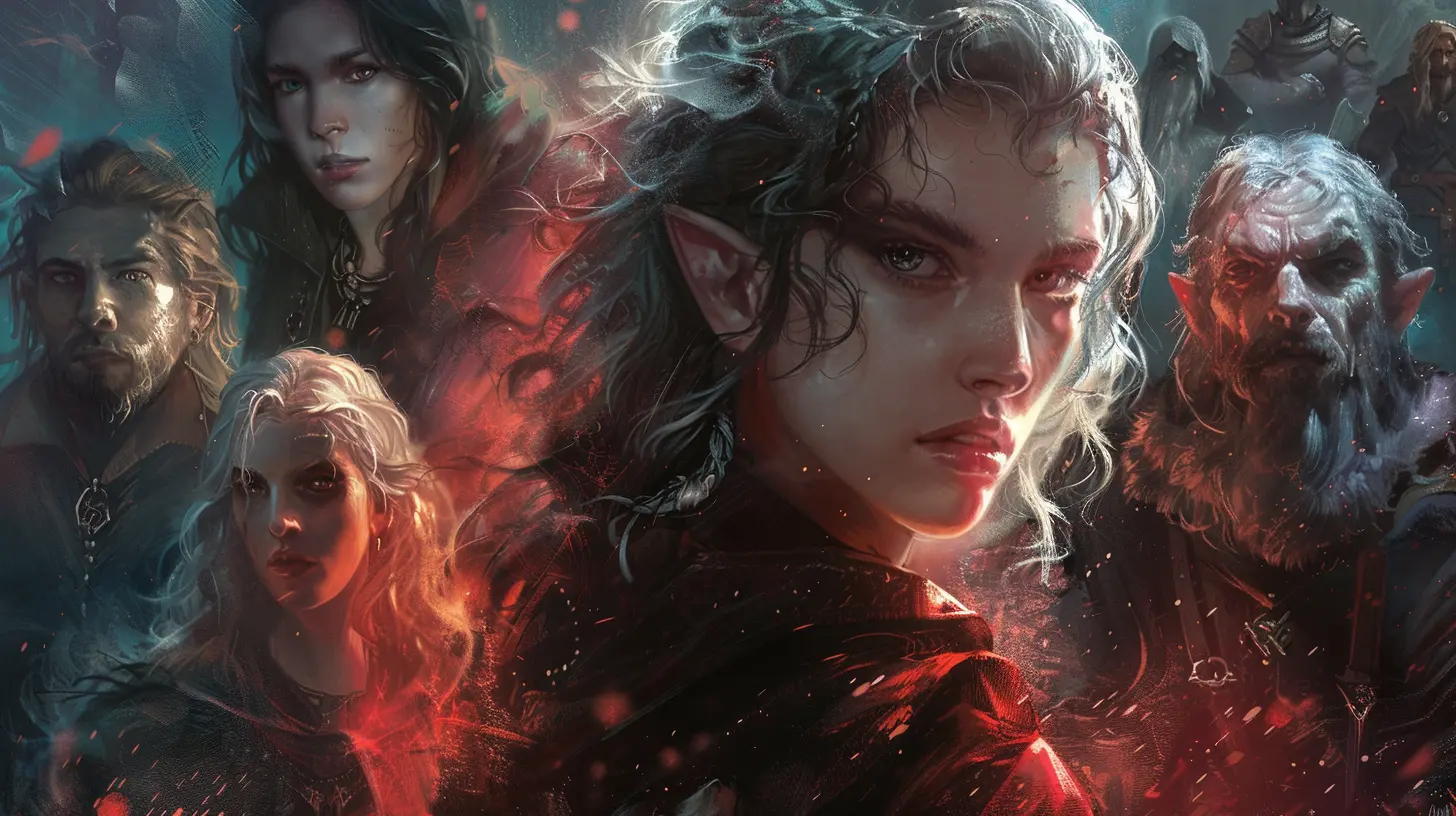
3. Mass Effect Series – Paragon or Renegade? Heroism Gets Political
Mass Effect gave us a literal morality meter. Paragon (good cop) vs. Renegade (bad cop). Simple, right? Not really.Commander Shepard’s decisions shape entire galaxies. Do you sacrifice a few to save billions? Do you punch a reporter for asking too many questions? Do you side with the synthetic Geth, or the organic Quarians?
Each choice impacts not just friendships, but entire civilizations. And what’s wild is that the lines between “Paragon” and “Renegade” don’t always mean good and evil. Sometimes the Paragon choice feels naive. Other times, the Renegade path carries the weight of necessity.
By the end of the trilogy, it’s less about blue or red morality points and more about the relationships you’ve built, the ideals you’ve challenged, and the way you’ve defined your version of leadership. Mass Effect didn’t just ask what you believed—it asked _why_.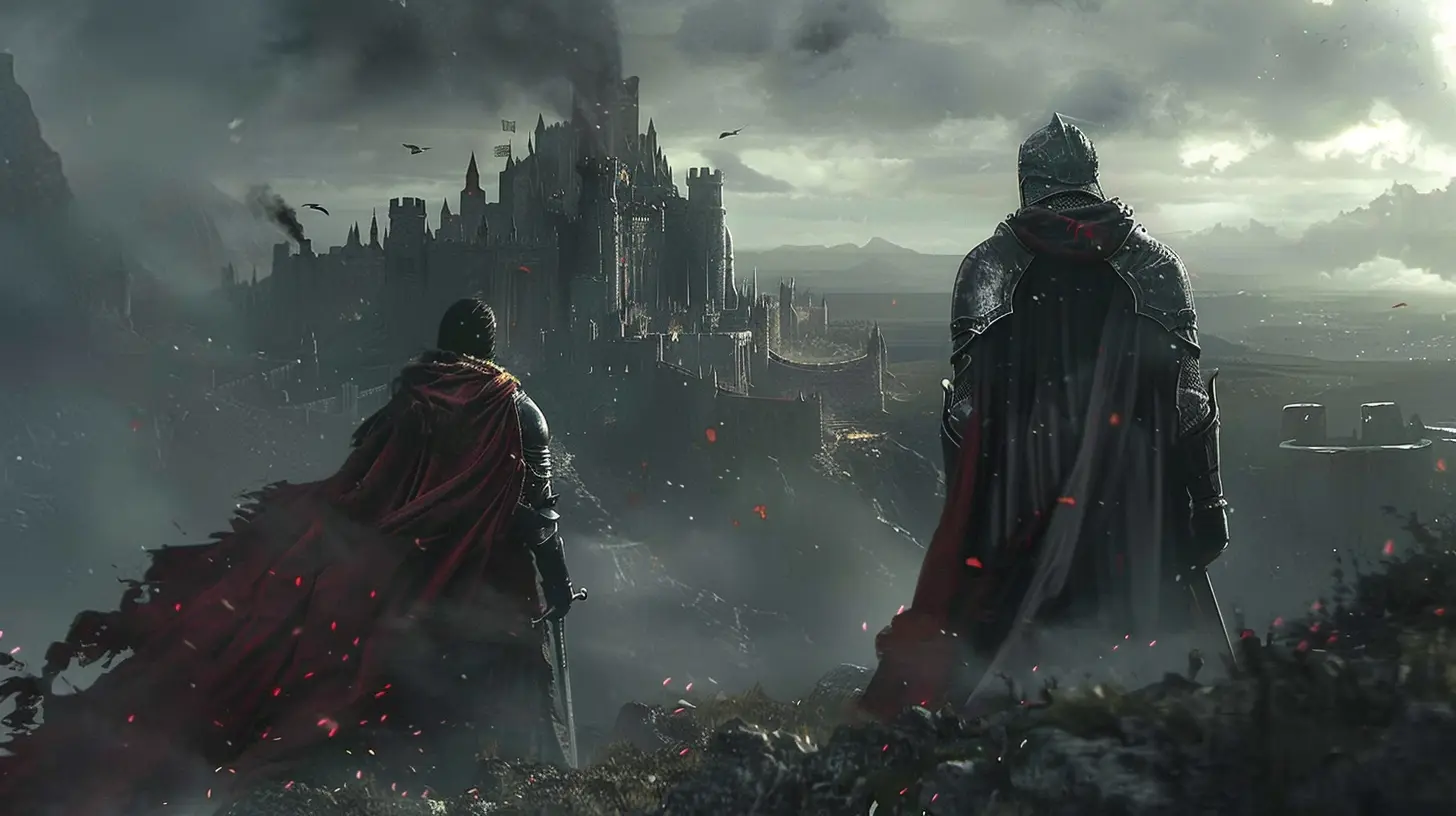
4. Planescape: Torment – What Can Change the Nature of a Man?
Here’s a throwback that still leaves people emotionally wrecked. Planescape: Torment might not have flashy graphics, but it sinks its philosophical claws deep into your brain.You play as The Nameless One, a guy who literally can’t die and has lived countless lifetimes. Each past life had wildly different philosophies—some cruel, some kind. As you uncover clues about your previous selves, the game constantly throws one question in your face: _What can change the nature of a man?_
Your choices shape not just your current self, but how you interpret and reconcile who you used to be. Are you doomed to repeat your mistakes, or can you change? Planescape doesn’t offer easy answers—it forces you to look inward and wrestle with your own beliefs. Heavy, right?
5. Dragon Age: Origins – Morality Meets Political Minefield
Dragon Age: Origins is Dungeons & Dragons with a moral hangover.You’re the Grey Warden, humanity’s last hope against a demonic invasion. Great, heroic stuff. But then you’ve got to choose: Do you support a power-hungry noble for political stability? Do you help a paranoid mage who might go full evil wizard? Do you kill your werewolf friend because he _might_ lose control?
Every decision has huge consequences, especially in a world where magic is feared, religion is weaponized, and racism is baked into the societal structure. The game never holds your hand—it just leans in and whispers, _“You’re gonna have to live with that.”_
It’s not about being a hero. It’s about being _your kind_ of hero—and dealing with what that really means.
6. Disco Elysium – When Your Morals Are Literally a Skill Tree
Okay, brace yourself—Disco Elysium is a trip.You’re a washed-up detective with a nasty hangover and, well, a fractured sense of identity. The twist? Your brain is part of the gameplay. Your thoughts, morals, and inner monologues are actual stats that influence how you see the world.
You customize your mental makeup. Want to be a die-hard communist? Go for it. A corrupt opportunist? Sure. A sad cop crying about humanity’s inevitable doom? That works too. The game pushes you to confront your ideologies constantly—sometimes hilariously, sometimes brutally.
It’s not just _what_ you do. It’s _why_ you do it—and _what part of your psyche_ told you it was a good idea. Few games dive this deep into moral introspection. Disco Elysium doesn’t ask you to save the world. It asks you to understand yourself.
7. Fable – Gimmick or Groundbreaker? Still Makes You Think
Fable went all-in on the morality meter. Be good, and you get a halo and butterflies. Be evil, and your eyes glow red as you sprout devil horns. Sounds cheesy, right?But here’s the twist—Fable was one of the first mainstream RPGs to make morality _visible_. NPCs react to your choices. Townspeople cheer or fear you. Even your dog (yes, your dog) behaves differently based on how you live your life.
It’s not just about stats—it’s about how the world treats you based on who you choose to be. While the moral system is more binary than complex, it made players start thinking: _My actions shape this world._ That’s powerful stuff, even wrapped in cheesy British humor.
8. Telltale’s The Walking Dead – Morality Under Pressure
If you’ve played Telltale’s The Walking Dead, odds are you’re still not over that ending.This game doesn’t focus on EXP or gear. It focuses on people—and the brutal choices you make to protect them. You play as Lee, a former convict who takes on a father-figure role for a little girl named Clementine. Their bond is the moral core of the game.
Do you lie to protect her innocence? Do you kill to keep her safe? Every decision has weight, and the clock’s ticking. You have seconds to decide, and the game _remembers everything_.
The Walking Dead isn’t about being right or wrong. It’s about surviving with your soul intact… or not. And it leaves a moral scar that stays with you long after the credits roll.
9. Cyberpunk 2077 – Redemption in a Morally Broken World
Sure, Cyberpunk 2077 had a rocky launch, but under the technical debris lies a story steeped in moral grey.You play as V—an outlaw trying to make it big in a city that chews people up and spits them out. But it’s not about shiny cars and robot arms. It’s about identity, purpose, and whether you can still be “good” when the world around you is completely corrupted.
Your choices affect your relationships, fate, and even whether you accept death or fight it. Partnering with Johnny Silverhand, a literal terrorist trapped in your head, only adds more ethical complexity to an already messed-up world.
Cyberpunk asks: _Can you stay human when everything around you screams otherwise?_ And that’s what makes it powerful.
10. Fallout: New Vegas – Morality in the Wasteland
Fallout: New Vegas is like Mad Max with moral philosophy.Post-apocalyptic hellscape? Check. Factions vying for power? Check. A courier with a bullet in their head and a score to settle? You bet. But here’s the kicker: None of the factions are clearly good or evil.
NCR promises democracy but runs like a bloated empire. Caesar’s Legion is brutal and fascist—but weirdly effective. Mr. House is a cold-hearted capitalist... but he does get stuff done. You can ally with any of them—or go rogue.
The game doesn’t reward morality. It rewards conviction. And in a world where everything’s broken, doing the “right” thing might just mean choosing the least awful path.
Final Thoughts – Morality Isn’t a Meter. It’s a Mirror.
RPGs have evolved from letting us slay monsters to letting us examine our souls. These games challenge our values, push boundaries, and expose the messy, beautiful chaos of human morality. They're not just about what happens in-game—they’re a mirror reflecting who we are when no one's watching.So next time you're given a choice in an RPG—pause. Think. Rethink.
Because maybe, just maybe, the real role you’re playing is… yourself.
all images in this post were generated using AI tools
Category:
Rpg GamesAuthor:

Leif Coleman
Discussion
rate this article
1 comments
Melissa Cook
These RPGs challenge our perceptions of right and wrong, pushing players to confront the complexities of morality in truly immersive ways.
September 7, 2026 at 4:01 AM