Breaking Down the Most Iconic Unreal Engine Game Scenes
27 May 2026
When it comes to jaw-dropping, goosebump-inducing moments in gaming, Unreal Engine has delivered time and time again. From intense firefights in gritty war zones to magical jaw-droppers in open-world fantasies—Unreal Engine has been the magic wand behind the curtain, bringing worlds to life in ways we never thought possible.
And today, we’re going to take a deep dive into some of the most iconic game scenes built with Unreal Engine. So buckle up, grab your controller (even if it’s just for emotional support), and let’s break down some unforgettable moments that were powered by one of the greatest game engines of all time.
Why Unreal Engine Is a Powerhouse in the Gaming World
Before we get into the legendary scenes, let’s set the stage. Why does Unreal Engine matter so much?Unreal Engine, developed by Epic Games, isn’t just another game engine—it's a revolutionary toolkit that has empowered developers to build immersive, visually breathtaking, and deeply engaging games since the late '90s. Its real-time rendering, photorealistic capabilities, and open access have made it the go-to choice for both AAA studios and indie developers.
And let’s not forget that cinematic-quality dynamic lighting, hyper-detailed textures, and physics so real you can almost feel them—yeah, Unreal does that. Like the name implies, it’s almost too good to be true.
1. The Gears of War Chainsaw Scene – A Brutal Introduction
Let’s kick things off with a heavy hitter.Who could forget that first time Marcus Fenix revved up his Lancer’s chainsaw bayonet in Gears of War? It was gritty, it was gory, and it was pure adrenaline. That sound alone has been forever etched into the memory of gamers everywhere.
Unreal Engine powered the entire visceral experience. The lighting effects in the underground horror-tinged corridors, the tension from the shadows, and the detailed character models—Unreal Engine 3 was the muscle behind it all.
The chainsaw kill wasn’t just a cool animation—it was an emotional bookmark. It screamed, “This is war. This is survival. This is Gears.”
2. BioShock Infinite’s Opening Scene – A Touch of Heaven
Now, let’s change the pace a little.Step into Columbia. Clouds part. The sun beams down. And suddenly, you’re floating in a city in the sky. The opening scene of BioShock Infinite is nothing short of magical.
Built on Unreal Engine 3, this scene showcased not just technical brilliance but storytelling finesse. Every detail—the flutter of paper, the sound of a choir, the shimmering light through stained-glass windows—pulled you in.
The moment Booker DeWitt enters the lighthouse and is shot into the clouds, you're not just watching. You're feeling. And that, my friend, is Unreal Engine doing its thing.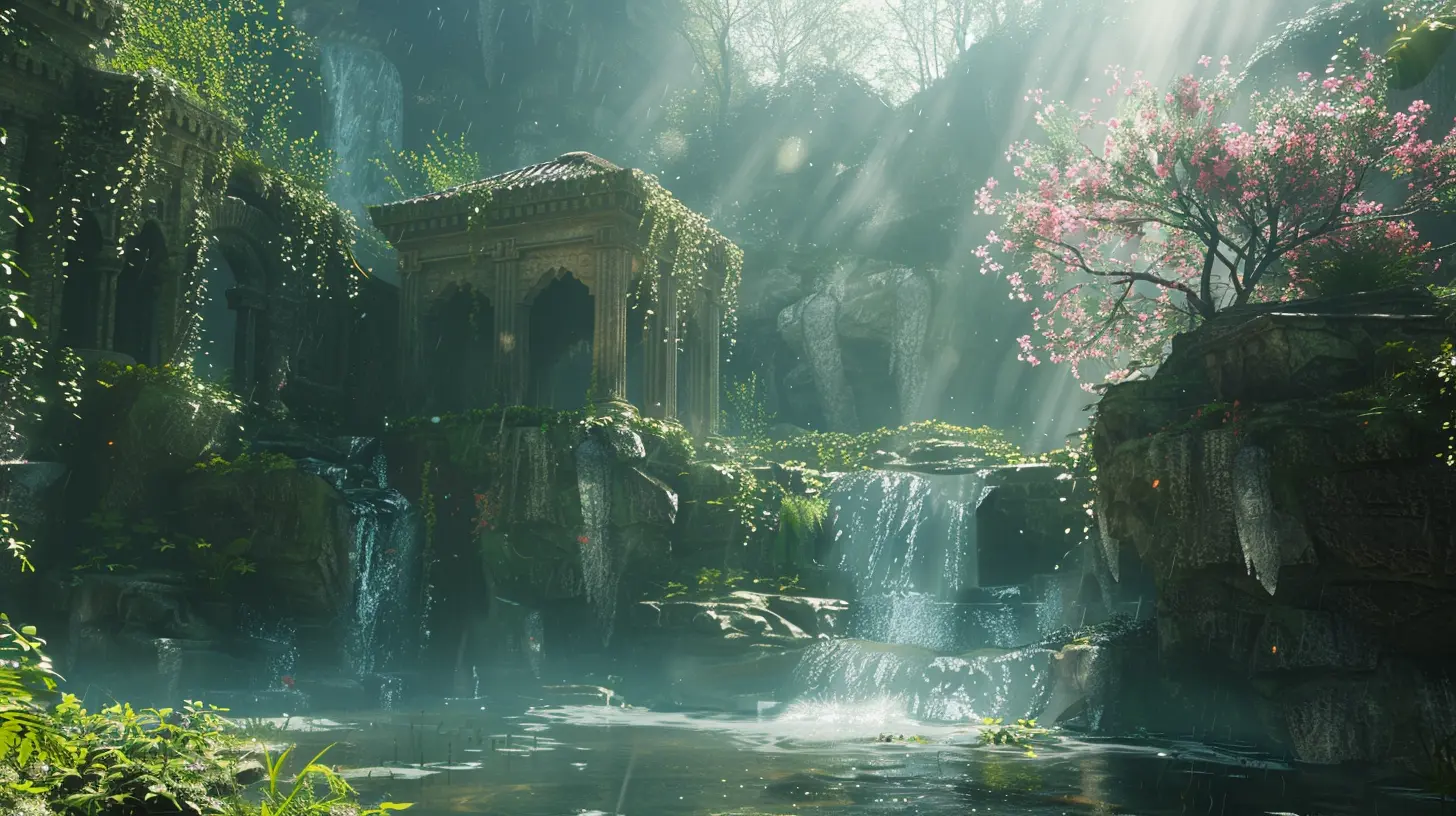
3. Final Fantasy VII Remake – Aerith’s Church
Here’s one that pokes the heart.The reimagined Aerith introduction scene in the Final Fantasy VII Remake, powered by Unreal Engine 4, is a masterclass in emotional storytelling and visual fidelity.
Crumbling architecture, sunbeams piercing through stained windows, flowers blooming in broken soil—it's poetic, really. Unreal Engine allows Square Enix to re-tell a beloved classic with the majesty it deserves, turning every moment into a moving painting.
You don’t just see Aerith—you feel the magic around her. That’s not just nostalgia, that’s great design amplified by top-tier tech.
4. Batman: Arkham City – “I’m Batman!”
Who didn’t get goosebumps the first time they glided across Arkham City?In Batman: Arkham City, the Unreal Engine 3 wasn’t just creating visuals—it was crafting atmosphere. The dark, oppressive tone, the flickering streetlights, the sharp shadows cast by Gotham’s broken buildings—every bit of it pulled you into the Dark Knight’s world.
And the best part? Every punch, counter, and grapple felt fluid and powerful. Like, you really felt like Batman. Unreal Engine made you the hero—not just a player behind the screen.
5. Star Wars Jedi: Fallen Order – AT-AT Walker Sequence
Boom. Crash. Sparks fly. And there you are—climbing an AT-AT walker through the foggy swamps of Kashyyyk like a rebel badass.That scene from Jedi: Fallen Order is a showstopper. Not just because "Star Wars" is inherently epic, but because Unreal Engine took it to another level. The textures, the physics, the cinematic transitions—it all flows like a movie.
Respawn Entertainment used Unreal Engine to stitch together gameplay and story with almost no seams. It's not “cutscene, now you play” — it's a smooth rollercoaster of action, and you're in the front seat.
6. Hellblade: Senua’s Sacrifice – The Whispering Darkness
This one's... different.Hellblade: Senua's Sacrifice didn't need a massive explosion or a city in the sky to shake you. All it needed was Senua, standing in the dark, haunted by whispers.
The game uses Unreal Engine 4 to build an incredibly intimate, terrifyingly real experience. The voices in your head? They feel like they’re right next to you (especially if you’re wearing headphones—do it). The facial animations are almost uncomfortably real.
This scene's power lies in its stillness. In the silence between heartbeats. It reminds us that Unreal Engine isn’t just about blockbuster flash—it’s about emotional depth too.
7. Fortnite’s Galactus Event – A Real-Time Monument
Okay, let’s be honest. Fortnite has had more “OMG!” moments than we can count. But the Galactus event? That was next-level.Millions of players, all sharing the same real-time experience. A galactic villain emerging from the ocean. You flying through space on a Battle Bus armed with lasers. It was part Marvel, part theme park ride, all madness.
Want to guess what made this technical magic possible? Yup—Unreal Engine.
This scene wasn’t just iconic because of what happened. It was iconic because how it happened—a shared, synchronized, and flawless real-time experience across the globe. You were a part of history... while wearing a banana suit.
8. The Matrix Awakens Tech Demo – Neo Meets Next-Gen
Let’s fast-forward a bit.The Matrix Awakens tech demo, built with Unreal Engine 5, isn’t technically a game, but it might as well be. It threw open the doors to a future where games and reality blur into one.
Realistic cityscapes, dynamic lighting, crowd simulations, and destructible environments—it’s the future of gaming, plain and simple.
Watching Keanu Reeves shift from actor to character in real-time is mesmerizing. The lighting, reflections, and motion are uncanny. And it’s not pre-rendered. It’s happening live on next-gen consoles.
This scene doesn't just break the fourth wall—it shatters it into a million photorealistic pieces.
9. Tomb Raider (2013) – Birth of the Survivor
Remember that first harrowing fall Lara Croft takes in the 2013 Tomb Raider reboot? That moment when she crawls, in pain, through a dark cavern?It’s not glamorous. It’s raw. It's survival.
Unreal Engine brings that grit to life. The trembling torchlight, the subtle facial animations, the cave’s haunting ambiance—it transforms players from spectators to survivors.
You’re not just watching Lara become a Tomb Raider. You are her. You feel every scrape, every gasp, every bit of courage she musters to go on.
That's something only powerful game design, and an engine like Unreal, can deliver.
10. The Witcher 4 (Teaser) – The Future Has Arrived
Alright, hear me out. We haven't seen the full scene yet, but even the teaser image from CD Projekt Red’s The Witcher 4 running on Unreal Engine 5? It sent shivers.A wolf medallion buried in snow. Wind howling. A promise of what’s coming.
While we wait for more, the potential already speaks volumes. If Witcher 3 wowed us with its depth and storytelling, imagine what its sequel will be like with UE5 behind the wheel.
And isn’t that the coolest part? Knowing that the future scenes will keep pushing boundaries—breaking the walls between reality and fantasy even further.
So What Makes These Scenes So Iconic?
It’s not just the graphics. Sure, that’s part of it. But what really makes these Unreal Engine-built scenes stand out is the emotion they evoke.Some make us cheer. Others make us cry. Some remind us of what it means to fight, to survive, to hope. All of them suck us into a world we don’t want to leave.
And isn’t that what gaming is all about? Escaping. Becoming. Feeling.
Unreal Engine doesn’t just build pictures. It builds experiences.
Final Thoughts: The Legacy (and Future) of Unreal Engine
As technology keeps evolving, so will the tools that drive our favorite games. But one thing’s for certain—Unreal Engine will be sitting right at the helm.With Unreal Engine 5 already pushing the envelope of what’s possible, we’re about to see even more jaw-dropping moments. More stories that stay with us. More scenes that become part of gaming history.
And you know what? We’re here for it. Controller in hand. Heart wide open.
So, whether you’re reminiscing about chainsaw duels or dreaming about what comes next… know this:
The best scenes? They haven’t even been made yet.
all images in this post were generated using AI tools
Category:
Unreal Engine GamesAuthor:

Leif Coleman
Discussion
rate this article
2 comments
Fletcher Kane
These scenes truly showcase the power of storytelling.
July 3, 2026 at 5:01 PM
Leif Coleman
I completely agree! Each scene tells a story that resonates deeply with players.
Xeno Cole
Unreal Engine scenes are like the art gallery of gaming. They redefine visuals and leave you breathless. If you're not appreciating the craft, are you even a true gamer?
May 27, 2026 at 4:34 AM
Leif Coleman
I completely agree. Unreal Engine really raises the bar for visuals in gaming, making each scene a work of art that enhances the entire experience. It's hard not to appreciate that level of craftsmanship.