The Evolution of Unreal Engine Through the Games It Powers
16 March 2026
If you’ve been gaming for a while, chances are you’ve played at least one title built with Unreal Engine. From jaw-dropping visuals to gameplay mechanics that pull you in for hours, Unreal Engine has quietly become the behind-the-scenes superhero of the gaming world. But how did we get here? What’s the story behind this powerhouse of a game engine?
Let’s take a trip down memory lane and explore the evolution of Unreal Engine—through the very games that made it legendary.
🎮 Where It All Started: Unreal Engine 1 (1998)
Back in 1998, the gaming industry saw something revolutionary. The first version of Unreal Engine made its debut with a game aptly named Unreal. This was Epic Games’ statement to the world: “We’re here, and we mean business.”What made Unreal such a big deal? It blew people away with real-time lighting, colored lighting effects, and impressive 3D environments. Sure, it looks primitive by today's standards, but back then? Total game-changer.
Key Games:
- Unreal (1998) – The OG that started it all.- Deus Ex (2000) – A cult classic blending RPG and FPS elements.
- Harry Potter and the Sorcerer’s Stone (2001) – Yes, even our favorite wizard had his moment powered by UE1.
This was just the beginning.
🔥 Leveling Up: Unreal Engine 2 (2002)
By the early 2000s, gaming needed more horsepower, and Epic wasn’t about to be left behind. Unreal Engine 2 came packed with improved rendering, better physics, and support for larger-scale environments.UE2 brought dynamic character animations and more realistic AI behavior, making gameplay feel alive and unpredictable. Multiplayer games started to shine—LAN parties lit up across the globe.
Key Games:
- Unreal Championship (2002) – Fast-paced, competitive arena shooting.- Tom Clancy’s Rainbow Six 3 (2003) – Tactical shooter greatness.
- America’s Army (2002) – Even the U.S. Army got involved. Seriously!
This era set the tone for how versatile the engine could be. From tactical shooters to story-driven epics, UE2 proved it could handle it all.
⚙️ Technology Meets Art: Unreal Engine 3 (2006)
Ah, Unreal Engine 3. This is where things got real. Launched in 2006, UE3 became the gold standard across the industry for nearly a decade. It introduced high-dynamic-range rendering (HDR), global illumination, and improved physics thanks to the Havok engine integration.What’s really cool? UE3 wasn’t just used for video games. It crept into virtual production for film, visualization tools, and more. It became bigger than gaming itself.
Key Features:
- Advanced lighting techniques- Realistic physics simulation
- Support for consoles like Xbox 360 and PS3
Key Games:
- Gears of War (2006) – The cover shooter that redefined the genre.- Mass Effect Trilogy – Space opera + RPG + Unreal = Magic
- Batman: Arkham Asylum (2009) – Finally, a superhero game got it right.
If UE2 was promising, UE3 was the proof. It powered some of the most iconic titles of the 2000s and early 2010s—and looked amazing doing it.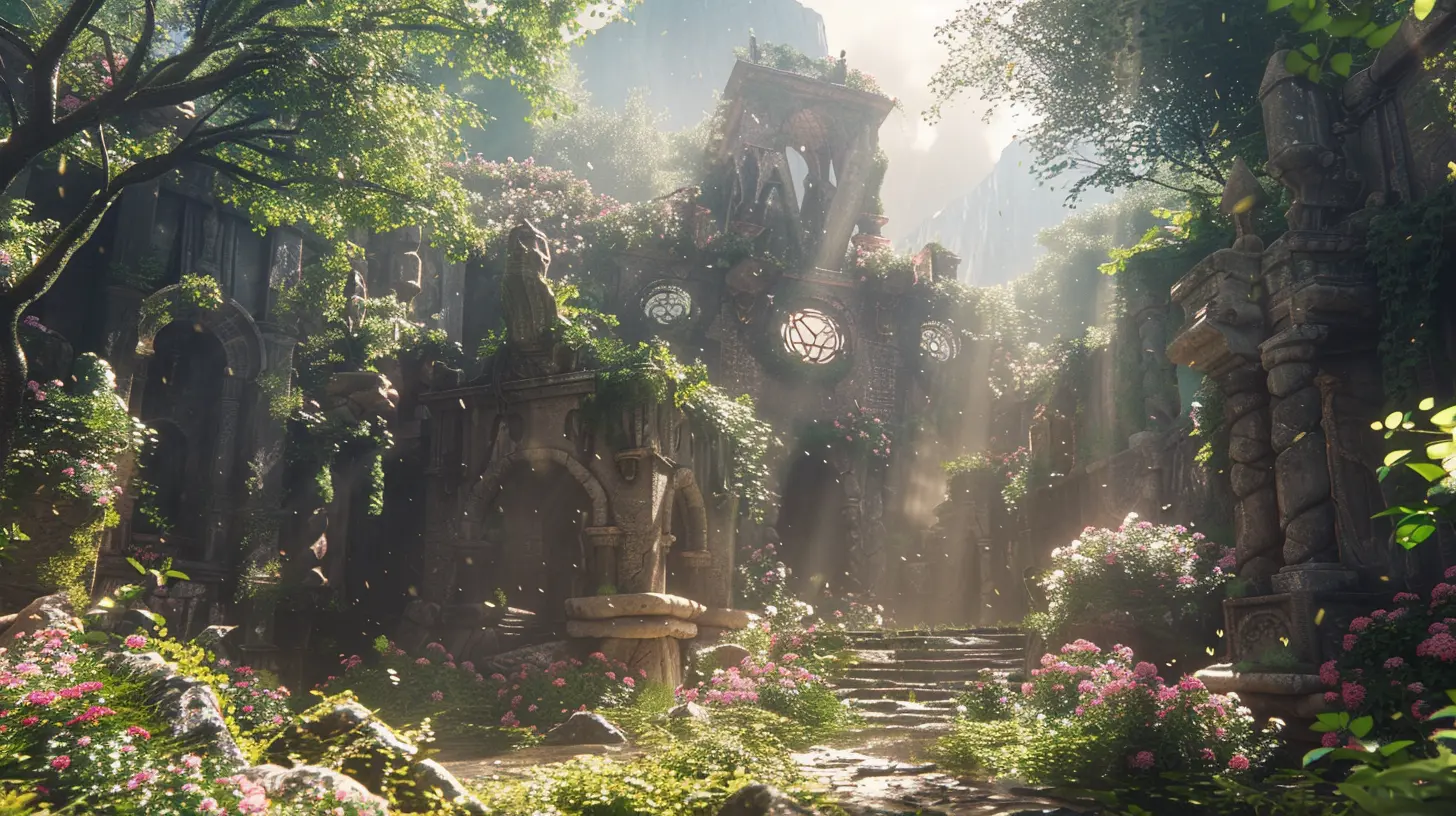
🌍 Unreal Gets Open-World Ambitions: Unreal Engine 4 (2014)
Then came Unreal Engine 4. And boy, did it make a splash. Released in 2014, this was Epic saying “We’re not just going to update—we’re going to completely reinvent.”UE4 brought photorealism to the table. It introduced physically based rendering (PBR), a more modular particle system, and Blueprints—visual scripting that made game development way more accessible.
Even better? Epic made UE4 free to use with royalties, opening the doors to indie studios and solo developers around the world. Suddenly, you didn’t need a seven-figure budget to make something beautiful.
Key Features:
- Blueprints Visual Scripting- Physically Based Rendering (PBR)
- VR and AR support
- Open-world scalability
Key Games:
- Fortnite (2017) – Not just a game, a cultural movement.- Street Fighter V (2016) – The fighting genre meets next-gen visuals.
- ARK: Survival Evolved (2017) – Massive open-world survival done right.
- Hellblade: Senua’s Sacrifice (2017) – Indie studio, A+ graphics.
UE4 was a game changer for, well… making games. It gave creators more tools, more power, and more freedom than ever.
🤯 Welcome to the Future: Unreal Engine 5 (2022+)
Now we’re talking. Unreal Engine 5 is the current beast in the room. First teased in 2020 and officially launched in 2022, UE5 is pushing boundaries in ways we couldn’t even imagine a few years ago.The two jaw-dropping features? Nanite and Lumen.
- Nanite allows for billions of polygons to be rendered in real-time, meaning artists can drop movie-quality assets directly into their games without frying hardware.
- Lumen delivers real-time dynamic lighting and reflections, making environments feel truly alive.
Key Features:
- Nanite Virtualized Geometry- Lumen Global Illumination
- World Partition System
- MetaHuman Creator for realistic characters
- Full backward compatibility with UE4
Key Games:
- The Matrix Awakens Tech Demo – Basically a playable movie.- Fortnite Chapter 4 and beyond – Continuously evolving with UE5.
- Senua’s Saga: Hellblade II – Stunning, emotional, next-gen storytelling.
UE5 isn’t just about better graphics—it’s about creative freedom. It’s about shortening the gap between concept and creation. Honestly, it’s insane what small teams can achieve now.
🌐 Beyond Games: Unreal Engine in Other Industries
Here’s the curveball—Unreal Engine isn’t just for games anymore.UE4 and UE5 are now widely used in:
- Film and TV (think The Mandalorian, shot with virtual sets created in Unreal)
- Architecture Visualization
- Automotive design
- Medical simulations
The engine has become a staple for any industry that needs real-time, high-fidelity simulations. It’s not just a game engine anymore; it’s a real-time 3D engine with no limits.
🧠 What Makes Unreal Engine So Special?
Let’s talk about why UE has stayed at the top for over two decades:- Flexibility: Whether you’re building an indie mobile game or a AAA console title, Unreal’s got your back.
- Visual Quality: Unreal Engine doesn’t just look good—it looks real.
- Community & Resources: Tons of free tutorials, templates, and a passionate userbase.
- Blueprints: No coding? No problem. Visual scripting has opened the door for new creators.
- Cross-Platform Magic: Run your game on PC, PlayStation, Xbox, mobile, and even VR/AR.
It’s not just a toolbox—it’s the whole workshop, pre-loaded with everything a creator needs.
🕹️ What's Next for Unreal Engine?
Honestly? The sky's the limit.Epic is investing more into Metaverse-like virtual spaces, expanding real-time collaboration tools, and optimizing for AI-driven experiences. With UE5 continuing to evolve, we might be looking at a future where creating a game is as easy as drafting a blog post (hey, kind of like this one!).
Upcoming games like Avowed, STALKER 2, and the next Tomb Raider are already harnessing the power of UE5. And they're just scratching the surface.
🚀 Final Thoughts
From humble beginnings in the late ’90s to powering some of the most iconic and visually stunning experiences in gaming history, Unreal Engine has truly evolved into something… unreal. 😏It’s more than a piece of technology—it’s a platform that has empowered artists, developers, and storytellers to bring their wildest ideas to life. Whether you're a gamer, a developer, or just someone who appreciates a good behind-the-scenes story, the journey of Unreal Engine through the games it powers is nothing short of legendary.
So next time you fire up your favorite game, take a moment to appreciate the engine under the hood—it might just be Unreal.
all images in this post were generated using AI tools
Category:
Unreal Engine GamesAuthor:

Leif Coleman
Discussion
rate this article
2 comments
Vanta McCarty
Incredible to see how Unreal Engine has transformed the gaming landscape! Each evolution not only enhances visuals and gameplay but also inspires creativity in developers. The possibilities are limitless, and I can’t wait to see what the future of gaming holds!
March 23, 2026 at 4:30 AM
Leif Coleman
Thank you! It's exciting to witness Unreal Engine's impact on gaming and creativity. The future is indeed bright!
Anastasia Hahn
Unreal Engine has revolutionized gaming, pushing boundaries and redefining what’s possible. From groundbreaking graphics to immersive experiences, it’s not just a tool; it’s a game-changer. As developers harness its power, we're witnessing the birth of masterpieces that will shape the future of the industry. Buckle up!
March 20, 2026 at 8:40 AM
Leif Coleman
Thank you! Unreal Engine truly is a transformative force in gaming, enabling developers to create stunning experiences that set new standards for the industry. Exciting times ahead!