The Value of Failure in Game-Based Learning
1 August 2026
We've all been there. You’re on level 25 of your favorite game—so close to winning—and boom! You fall into a trap or lose to the boss for the tenth time. Frustrating, right? But let's be honest, something magical happens after that moment of failure. You try again. You tweak your strategy. You learn. And eventually, you conquer.
That, my friend, is the raw value of failure in game-based learning.
In this article, we're diving deep into why failing in games isn't just okay—it's needed. Especially when we're using games as educational tools. So grab your controller (or keyboard), and let's unpack why game-over screens might just be the secret ingredient to real learning.
What Is Game-Based Learning, Anyway?
Before we hit play, let's define our terms.Game-based learning (GBL) is exactly what it sounds like—using games to promote learning. Not just educational games like typing programs, but also well-designed, thoughtful experiences that teach skills like logic, strategy, creativity, teamwork, and yes... resilience.
Whether it's a history simulation, a coding puzzle, or a classroom escape room, GBL aims to wrap educational content in the engaging mechanics of play. And guess what? Failure is built in.
Failure: The Underrated MVP
When we hear the word “failure,” our inner critic often perks up. We associate it with defeat, embarrassment, maybe even shame. But in the context of games—and learning—failure is actually a rockstar.Think about it. In most games, failure isn’t final. It’s a stepping stone. Miss a jump? Try again. Lose a match? Rethink your strategy. Get stuck on a puzzle? Look at it from another angle. This process of failing fast and learning faster is what makes games so addictive—and so educational.
Why Failure Feels So Different in Games
So why does failing in a game feel light-years different than failing a test or getting a bad mark in school?Here’s the kicker: games are designed to make failure safe. You're encouraged to mess up. Trial and error isn't punished—it’s expected. The stakes are lower, the feedback is immediate, and the result? A curious player who’s motivated to improve.
In a traditional classroom setting, failure can feel permanent. But in games? It's just part of the narrative. Just another level to beat.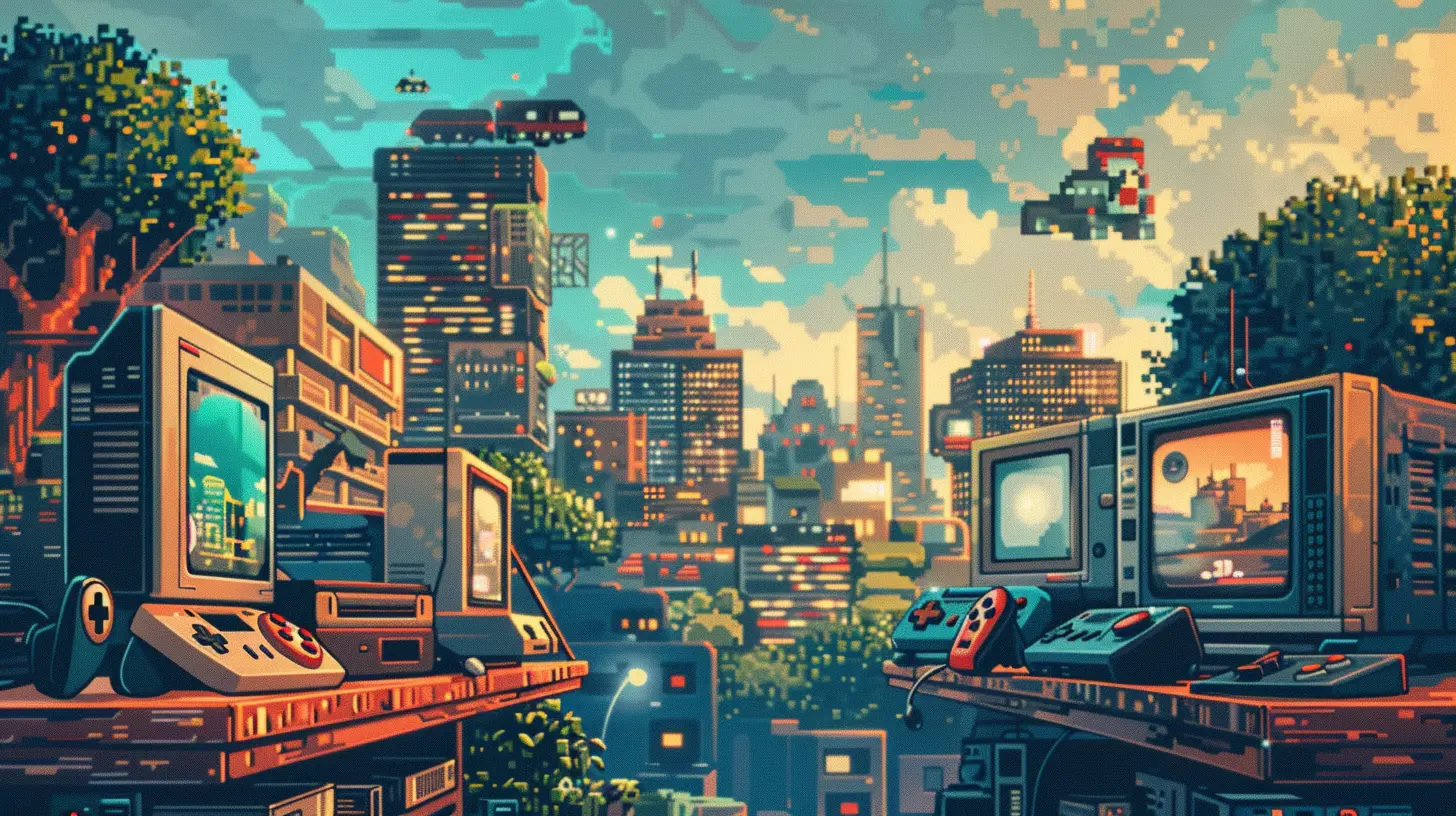
Rewiring Our Brain Through Failure
This sounds fancy, but it's not rocket science—okay, maybe just a little.Neuroscience tells us that when we fail, our brains light up with activity. We become more alert, more focused. The brain is literally trying to solve the problem. If we get everything right the first time, we’re actually not learning much.
Games tap into this loop. They offer complex challenges that push us just beyond our comfort zone—what psychologist Lev Vygotsky would call the "Zone of Proximal Development." It's that sweet spot where learning is hard enough to be challenging, but not so hard it's impossible.
The Psychology of “Try Again”
Let’s talk dopamine.Each time we make progress in a game—whether it's collecting coins, solving puzzles, or advancing to the next level—we get a little hit of dopamine. This feel-good chemical keeps us coming back. And here's the kicker: even small wins after failure can yield big rewards in our brains.
Ever notice how satisfying it feels to beat a level you’ve been stuck on for hours? That’s dopamine, baby. It reinforces the learning loop that games do so well.
Real-World Skills Gained Through “Failure Loops”
The cycle of try-fail-learn-repeat in games isn't just about better gameplay. It teaches real-world skills. And they’re the kind you can't just memorize from a textbook.Let’s run through a few:
1. Problem Solving
Games dish out puzzles and challenges faster than you can say "Game Over". Failing forces you to think differently, test new strategies, and adapt.2. Resilience
Every failed mission is a chance to build grit. You learn to bounce back without giving up. Honestly, that’s a life skill we all need more of.3. Critical Thinking
Games often rely on logic, timing, and prediction. When you fail, you’re compelled to analyze what went wrong.4. Creativity
Ever played a sandbox game like Minecraft? Failure in open-world games sparks creativity. You try building differently or exploring new paths.5. Collaboration
Multiplayer games teach teamwork. Not winning because someone didn’t coordinate? You’ll learn to communicate better next round.Designing Failure Into Learning Games
This is where the magic happens.If you're a game developer or educator, you need to craft failure carefully. It should be more like a trampoline than a wall—something players can bounce off of, not crash into.
Here are a few tips:
- Provide Immediate Feedback: Help players understand why they failed.
- Make It Reversible: Let them try again quickly without starting from scratch.
- Scale the Challenge: Introduce difficulty gradually to keep players engaged.
- Tie Failure to Progress: Design systems where failure leads to growth (new skills, insights, or even narrative evolution).
When done right, failure isn't just instructive. It's addictive.
How Teachers Are Using This In The Classroom
Now let’s get real. Teachers around the world are jumping on the GBL wagon for a reason—it works.Picture a high school biology class. Instead of memorizing terms, students play a game where they build cells and battle diseases. They try and fail over and over until they master the material through gameplay mechanics.
Failure here doesn’t earn a red mark. It earns experience points, power-ups, and better understanding. Students are more engaged. They take risks. They collaborate. And, most importantly, they learn without even realizing it.
Case Study: Math and the “Epic Fail”
One standout story? A teacher gamified math tests by turning them into multi-level quests. Instead of grades, students unlocked levels based on persistence and problem-solving.At first, kids hated failing. Who wouldn’t? But soon, they started getting excited for second tries. They knew failure meant they were one step closer to cracking it.
Grades improved. So did attitudes.
The Long Game: How Failure in Games Shapes Lifelong Learners
Let’s zoom out a bit. Mastering failure in games teaches us how to fail in life, without crumbling.You start to see failure not as a dead end, but a detour sign. You analyze, adjust, and advance. That’s huge. That’s the kind of mindset companies want, creators need, and entrepreneurs live by.
In game-based learning, you’re not just creating better gamers. You’re creating resilient thinkers, problem-solvers, and innovators.
But Wait—Isn’t Too Much Failure Bad?
Good question. Like hot sauce, failure has to be used in moderation.If a game is too hard or offers no real feedback, failure becomes frustrating and demotivating. That’s why balance is crucial. Players should feel challenged—but also capable. Encouraged to try again, not rage-quit.
The key? Failing forward. Each flop should teach something. Otherwise, it’s just noise.
Tips for Embracing Failure as a Learning Tool
Whether you’re a teacher, parent, gamer, or curious learner—here are some bite-sized tips:- ? Normalize it: Talk about failure openly and positively.
- ? Reflect often: After losing, ask, “What can I try differently?”
- ⏱️ Retry quickly: Don’t let too much time pass between failure and another attempt.
- ? Encourage growth: Focus on progression, not perfection.
- ✊ Stay persistent: Remind yourself that even the best players fail—a lot.
So… Is Failure the New Superpower?
Honestly? Yeah. In game-based learning, failure isn't the villain—it’s a plot twist. A stepping stone. A secret level that unlocks a deeper kind of learning.It transforms passive learners into curious explorers. It builds mental muscle. It helps players—and students—step out of their comfort zones and into their potential.
So the next time you fail in a game, don’t sigh… smile. Because whether you realize it or not, you're getting better—not just at the game, but at life.
Game on.
all images in this post were generated using AI tools
Category:
Educational Value Of GamesAuthor:

Leif Coleman
Discussion
rate this article
1 comments
Paris McCord
Failure in game-based learning fosters resilience and critical thinking, essential skills that extend beyond the screen.
August 4, 2026 at 3:07 AM
Leif Coleman
I completely agree. Experiencing failure in games provides a unique opportunity for growth, encouraging learners to adapt and think critically in real-life situations.