Unreal Engine’s Impact on Storytelling in Gaming
26 July 2026
Gaming has come a long, long way—from chunky 8-bit pixels to cinematic, emotionally-rich masterpieces that rival Hollywood movies. And if there's one name that’s flashing like a neon sign in this evolution, it’s Unreal Engine. You’ve likely heard of it. Maybe you've even played a few (or a hundred) games made with it. But let’s dive deeper than just shiny graphics and pinpoint precision. Let's talk about how Unreal Engine has completely redefined storytelling in gaming.
We’re not just talking cool cutscenes. Nope. We’re talking immersive narratives, characters you bond with, and worlds that practically breathe. So buckle up—we’re about to unpack why Unreal Engine is the secret sauce behind some of the most powerful stories in modern gaming.
What Is Unreal Engine, Really?
Let’s zoom out for a sec.Unreal Engine, developed by Epic Games, is a game engine—basically the toolset and framework used by developers to create video games. But calling it just a “toolset” is kinda like calling a paintbrush “a stick with bristles.” It doesn’t quite do it justice.
It’s a powerhouse. A juggernaut. A canvas and a chisel rolled into one.
From indie developers trying to tell intimate stories to AAA studios building worlds as big as our imaginations, Unreal Engine is the go-to choice. Why? Because it’s flexible, visually stunning, and ridiculously powerful. And when it comes to storytelling? This engine doesn’t just support the narrative—it amplifies it.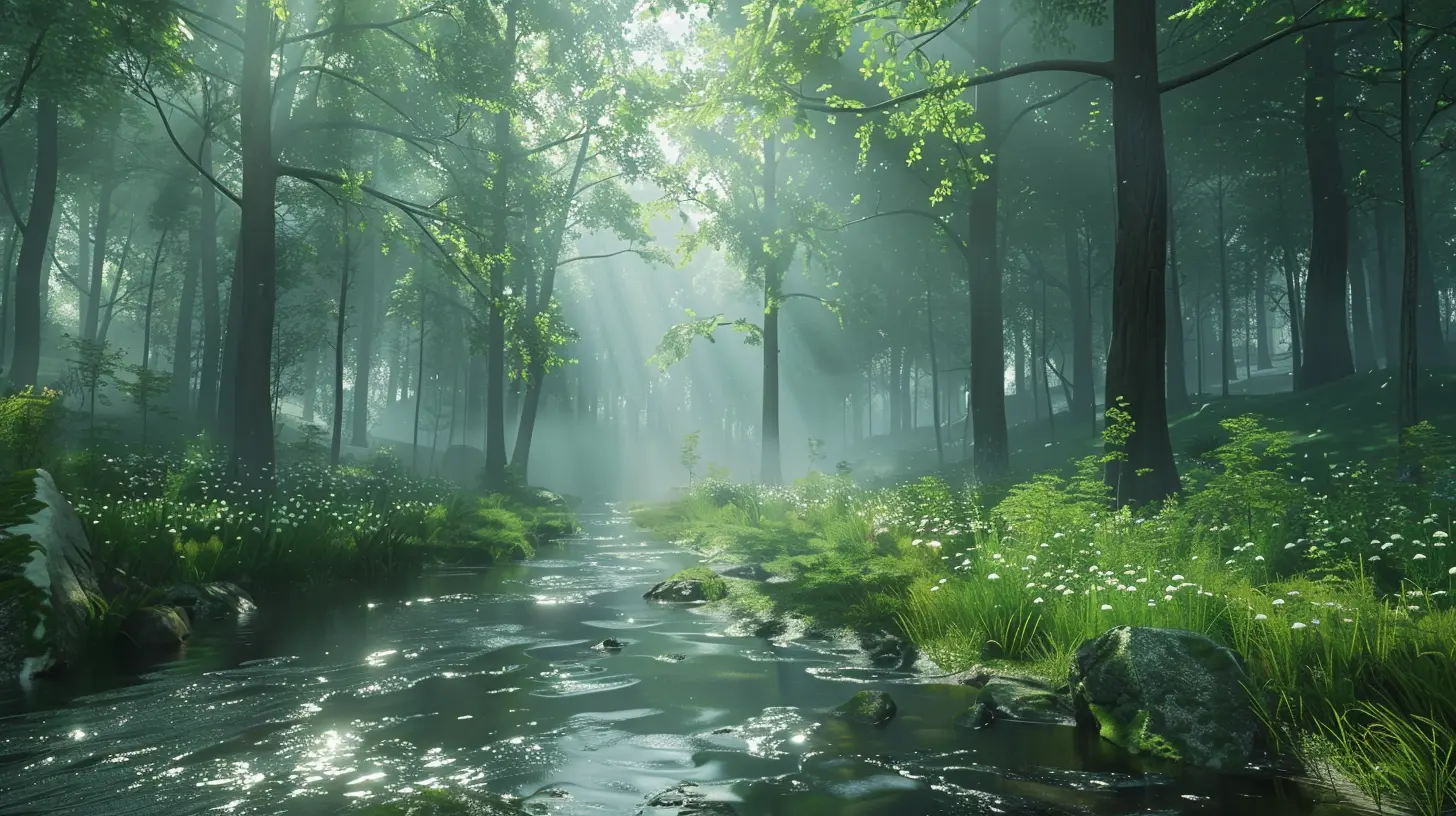
Cinematic Quality That Feels Like You're "In It"
Ever played a game and thought, “Wow, this feels like a movie!”? Chances are, Unreal Engine powered that experience.One of the biggest advantages Unreal brings to the table is its real-time rendering with photorealistic graphics. We're talking reflections so good you could fix your hair in them, lighting that dances across characters’ faces, and environments that almost smell like rain.
But here’s why that matters: storytelling isn’t just about words or voice acting. It’s about how emotions are shown. The furrow of a brow, the subtle shift in lighting during a tense moment—those are the storytelling tools Unreal Engine nails every single time.
Games like Hellblade: Senua’s Sacrifice, Star Wars Jedi: Survivor, and The Matrix Awakens tech demo? Yeah, Unreal made those storytelling experiences unforgettable.
Real-Time Tools = Real Emotional Impact
Here’s where things get spicy.Unreal Engine’s real-time tools allow developers to test and tweak scenes instantly. Think of it like rehearsing a play, but you can swap out the stage, lighting, and actors mid-scene. No need to render something for hours and then realize the shadow looks weird or the vibe is off.
What does that mean for storytelling?
It means more experimentation. More emotional depth. More feels. Devs can adjust a scene until it clicks. Until it hits you right in the gut. And honestly, that’s where the magic happens.
The Rise of Interactive Storytelling
Storytelling in games used to be pretty linear. You follow the path, watch the cutscene, rinse and repeat. But with Unreal Engine, we're seeing storytelling evolve into something way more interactive and player-driven.Thanks to features like Blueprints (Unreal's node-based scripting system), even smaller studios can create branching narratives where your choices matter. Like, actually matter.
You didn’t save that character? Boom—they're gone, and the story shifts. Didn’t explore that cabin in the woods? You missed a major plot reveal. Games like Life is Strange: True Colors and The Quarry thrive on that butterfly effect, and Unreal makes it all possible without needing a massive technical team.
Bringing Characters to Life with MetaHuman
Let’s talk characters for a sec.A good story needs compelling characters. And here's where Unreal Engine absolutely crushes it—with MetaHuman Creator.
This tool is basically digital sorcery. It lets developers create ultra-realistic human characters in a fraction of the time it used to take. We're talking facial expressions so detailed you can see the pain in someone’s eyes or a smirk that tells you they’re up to no good.
And that realism? It pulls players in. Makes them care. Makes you feel like you’re having a conversation with a real person, not a polygon puppet.
VR and Unreal: The Future Is First-Person
Virtual Reality is changing the game, literally. And Unreal Engine is leading the charge.Imagine stepping into a story. Not playing it, not watching it, but living it. Whether it’s solving a mystery, surviving a horror scenario, or wandering through a fantasy world—VR powered by Unreal Engine creates experiences that blur the line between player and protagonist.
With its high-performance capabilities and stunning visuals, Unreal makes VR stories immersive in a way that used to be pure sci-fi. Games like Half-Life: Alyx and The Walking Dead: Saints & Sinners give a taste of what’s possible… and it’s only the beginning.
Empowering Indie Devs to Tell Meaningful Stories
Here’s something beautiful: Unreal Engine isn’t just for big-budget blockbusters. It’s also for the little guys. The indie developers working in their garages, pouring their hearts into stories that need to be told.Thanks to Unreal’s accessibility (it's free to use until your game makes serious money), indie teams can create stunning, heartfelt narratives that resonate. No compromises on graphics. No cutting corners on performance.
Titles like What Remains of Edith Finch and Kena: Bridge of Spirits prove that powerful storytelling doesn’t need a Hollywood budget—just the right tools, and a big enough heart.
The Role of Sound and Music in Emotional Storytelling
We can’t forget about sound. It’s the unsung hero of storytelling. And Unreal Engine’s audio tools are like an orchestra waiting to be conducted.Spatial audio, dynamic music cues, and real-time sound mixing all work together to create atmosphere. Think of it like seasoning in a great meal. You might not always notice it—but take it away, and something feels...off.
With Unreal, developers can sync music with game events, change the mood with a shift in score, or even make the player’s heartbeat sound louder during intense moments. All of it builds immersion.
Time-Saving = More Time for Story
This one might not sound flashy, but stick with me.Unreal Engine streamlines the development process with tools that cut down on repetitive work. We're talking asset libraries, automated lighting, drag-and-drop environments… the works.
So what’s the big deal?
More time saved = more time to focus on narrative. Devs can spend less time troubleshooting shaders and more time crafting dialogue, story arcs, and emotional beats.
Everybody wins.
The Communities That Fuel Creative Storytelling
One of the most underrated elements of Unreal Engine’s storytelling power? The community.Thousands of developers, artists, writers, and storytellers share their work, collaborate on projects, solve problems together—and inspire each other. It’s a creative snowball that keeps rolling, and with each new game, the bar for storytelling gets higher.
Tutorials, forums, asset sharing… it’s all there. And that kind of synergy leads to creativity you can’t manufacture in a vacuum.
Unreal Engine’s Impact Is Just Getting Started
Let’s be real—what we’ve seen from Unreal Engine so far? It’s just the tip of the iceberg.With Unreal Engine 5’s features like Nanite (for insane detail) and Lumen (for next-level lighting), the ability to tell more dynamic, nuanced, and visually stunning stories is growing exponentially.
Imagine a future where your favorite game stories feel like lucid dreams—so real you question what’s fiction and what’s not. Unreal Engine is paving the way toward that.
Why It Matters (Beyond Just Games)
This kind of storytelling power doesn’t just change gaming—it reshapes how we think about narrative. Interactive storytelling is creeping into education, film, architecture, therapy… heck, even space simulation.When technology like Unreal puts creative control in more hands, the world becomes a richer, more empathetic place. And that? That’s worth celebrating.
Final Thoughts: More Than Just Pretty Graphics
At the end of the day, Unreal Engine isn’t just making games prettier—it’s making them more human.It’s giving storytellers the ability to craft experiences that make us laugh, cry, think, and connect. It’s fueling narratives that stick with you long after you’ve put the controller down.
So the next time you find yourself emotionally wrecked after a cutscene, or staring in awe at a digital sunrise, remember: it’s not just the art, or the writing—it’s the engine behind the curtain, working its silent magic.
And storytelling in games? It’ll never be the same again.
all images in this post were generated using AI tools
Category:
Unreal Engine GamesAuthor:

Leif Coleman
Discussion
rate this article
2 comments
Shannon Gilbert
Unreal Engine has revolutionized storytelling in gaming by enabling immersive narratives and dynamic environments. Its advanced tools allow developers to craft rich, emotional experiences, making players feel like active participants in their own unfolding stories.
October 15, 2026 at 4:41 AM
Kylie Palmer
Unreal Engine revolutionizes storytelling by blending immersive visuals with dynamic narratives, elevating player experiences to new heights.
August 20, 2026 at 3:54 PM
Leif Coleman
Absolutely, Unreal Engine's capabilities truly transform storytelling in gaming, offering players a rich, interactive experience like never before.