Using Games to Develop Spatial Awareness and Geometry Skills
27 July 2026
Ever tried to assemble a piece of IKEA furniture without looking at the instructions? If so, you’ve already danced with the concepts of spatial awareness and geometry. Now imagine sharpening those skills—not with hex keys and screws—but with games. Sounds more fun, right? That’s because it is!
In today’s world, where screens are often blamed for a lack of real-world skills, games (yes, games!) might just be the secret key to boosting brainpower—especially when it comes to spatial thinking and geometry. Whether you're a parent looking for smart screen time alternatives or a gamer curious about the hidden learning in your favorite titles, this is going to be a game-changer. Literally.
Let’s break it down.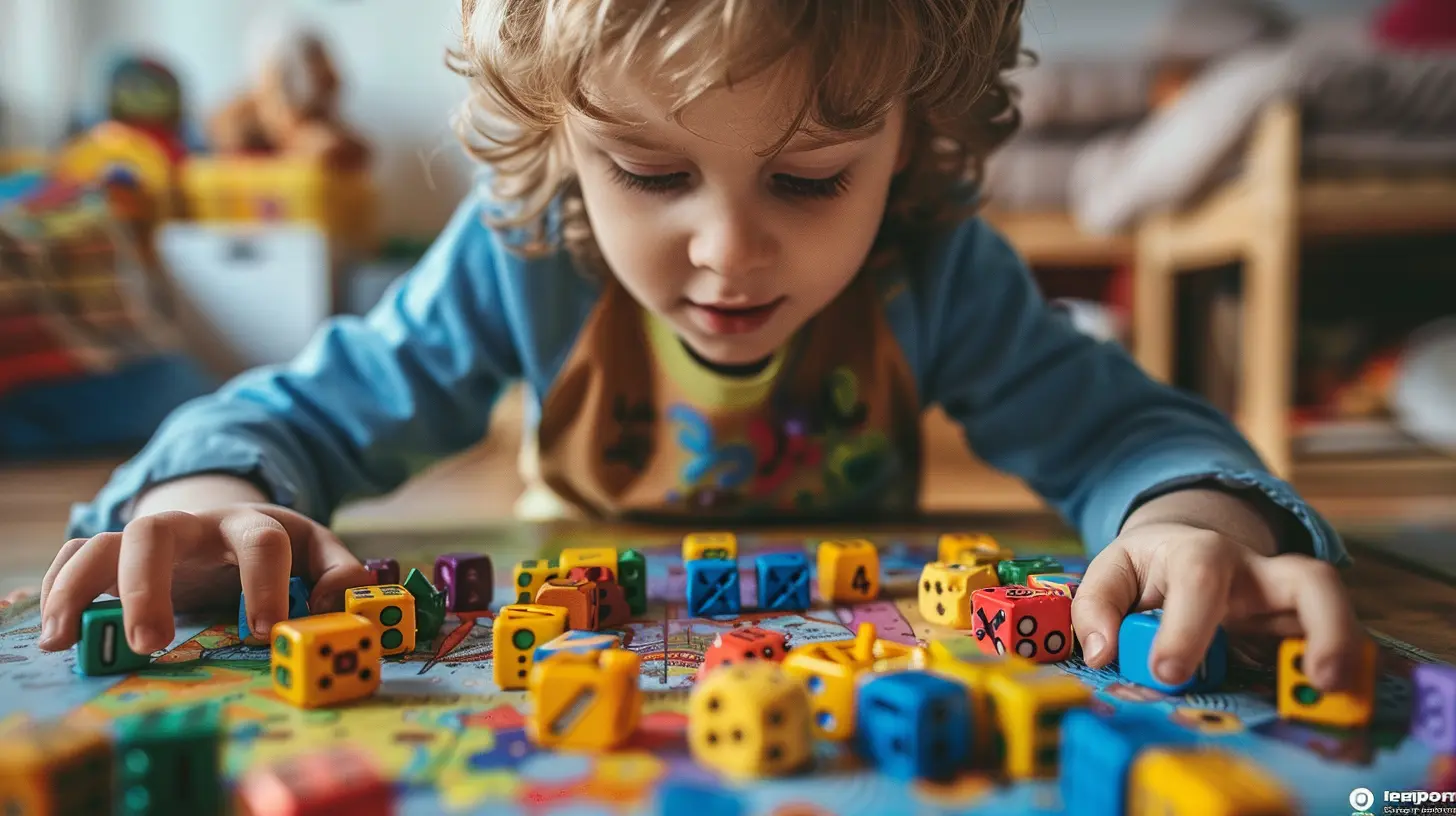
What Is Spatial Awareness, Anyway?
Let’s start with the basics. Spatial awareness is your brain's GPS. It helps you understand where you are in space, how objects relate to one another, and how they move. Think of a parking lot—you need spatial skills to gauge the size of your car, the space between the lines, and whether you can make that tight turn without dinging the bumper.Pretty important, right?
Now toss in geometry, the language of shapes, sizes, angles, and dimensions. Put the two together, and you've got a dynamic duo essential for everything from doing puzzles to designing skyscrapers.
But here’s the twist: these aren’t just school skills. They're life skills. And they can be developed early, naturally, and most importantly—through play.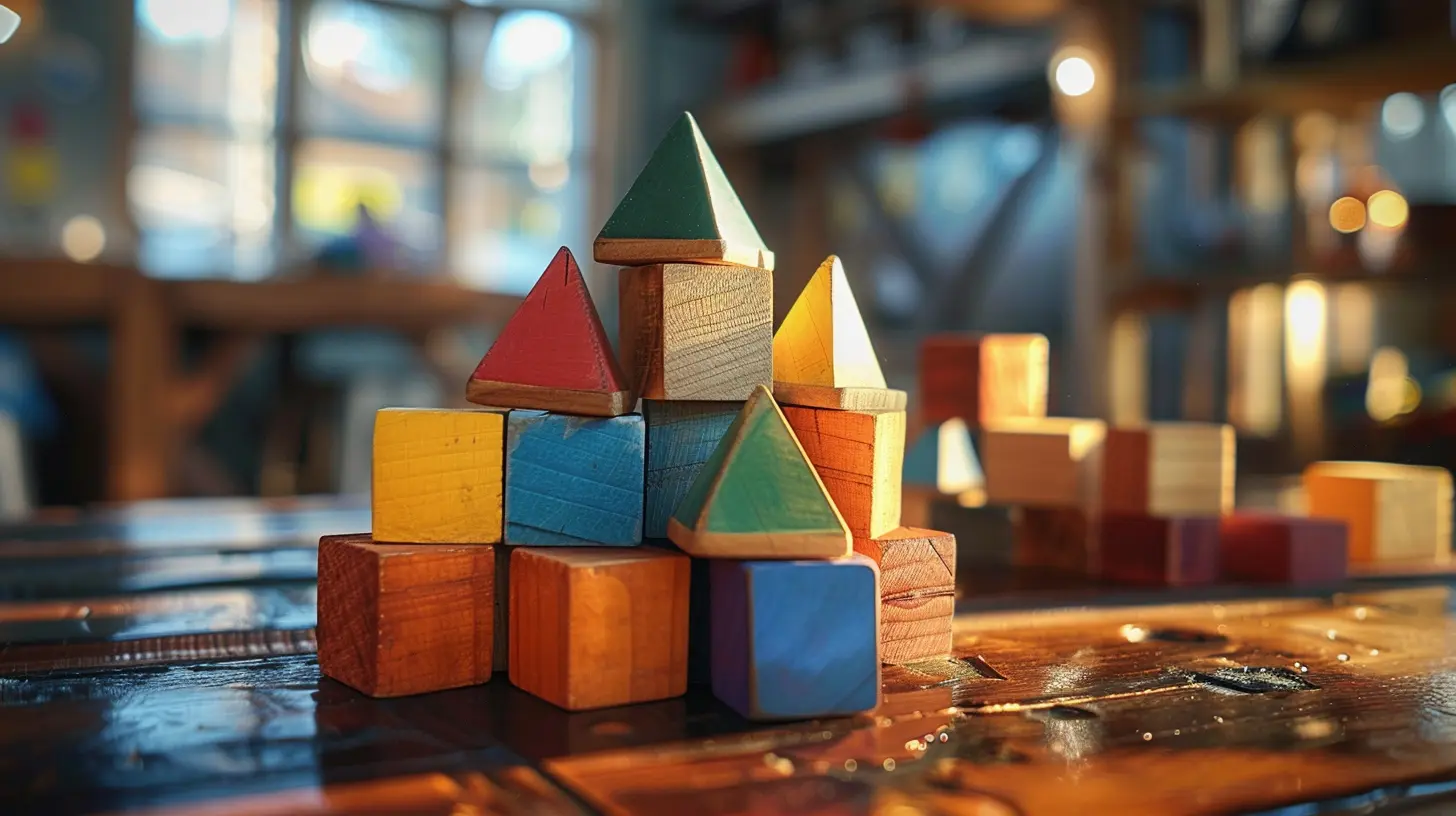
Why Games Are Perfect for Teaching Spatial and Geometry Skills
Remember how we learned best when we were kids? Through play. Games are sneaky educators—they pull players in with fun and keep them learning without them even noticing.Games activate parts of the brain responsible for problem-solving, decision-making, and spatial processing. It’s like doing a mental workout in a virtual gym, but without needing to sweat through a pair of gym shorts.
Games Provide Repetition (Without the Boredom)
One major bonus? Repetition. Geometry and spatial concepts often require practice. Games offer that naturally, with repeated levels, puzzles, or challenges—yet they never feel like drills. It's mastery by design.
Video Games That Boost Spatial Awareness
So, what are these magical titles that boost mental muscles? Let’s start with video games—those so-called “time wasters” that actually flex your brain.1. Tetris
Yes, the old-school block-dropper is a masterclass in spatial planning. You're constantly rotating and placing shapes, visualizing how they'll fit, and thinking a few steps ahead.This classic is practically a geometry class in disguise—pixels and all.
2. Minecraft
A sandbox of endless possibilities, Minecraft teaches geometry through construction. Players build structures with blocks, creating real-world measurements and spatial relationships.And let’s be honest—kids who can build giant pixel-perfect castles in Minecraft can absolutely learn angles and symmetry.
3. Portal & Portal 2
These mind-bending puzzle games challenge players to navigate 3D spaces by creating portals. It’s like learning physics, geometry, and spatial logic all at once—but way more fun than your old textbook.4. The Legend of Zelda Series
From dungeons to temples, these games are packed with spatial reasoning challenges—figuring out puzzles, navigating maps, and using objects in clever ways.You’ll find yourself visualizing complex layouts and remembering how different spaces connect—skills that directly translate into real-life navigation and problem-solving.
Board Games and Strategy Games That Flex the Brain
Not all great games are digital. Let’s not forget the old-school charm of tabletop games that pack a punch when it comes to learning geometry and spatial relationships.1. Blokus
Every player gets colored shapes and battles for space on a board. It’s all about shape placement, strategic thinking, and visualizing future moves. Kind of like competitive Tetris.2. Tangrams
Think of these like the OG geometric puzzles. Rearranging flat shapes to match a certain outline helps kids (and adults) understand concepts like rotation, reflection, and composition.3. Rush Hour
In this sliding block game, players work out how to free their car from a traffic jam. Each puzzle builds sequential logic and spatial skills. Bonus: it’s super satisfying when you finally escape!4. Dungeons & Dragons (D&D)
Surprised to see this here? Don't be. Navigating maps, planning attacks, considering visibility and movement within a grid—all of these involve serious geometry and spatial awareness. Plus, you get to be a wizard.How Different Age Groups Benefit from Game-Based Spatial Learning
Think games only benefit kids? Nope. Let’s break it down by age:Early Childhood (Ages 3–7)
Games like shape sorters, building blocks, and simple digital puzzle apps introduce basic concepts like symmetry, size comparison, and pattern recognition._And guess what? All that LEGO building? Yep, it’s geometry._
Elementary to Middle School (Ages 8–13)
This is prime time for growth. Strategy games, Minecraft, puzzle games, and even creative drawing apps help develop deeper spatial visualization, along with logic and planning.Teens and Adults
Teen brains are ready for more complex problem-solving, and games like Portal, The Witness, and geometric drawing puzzles challenge abstract reasoning and spatial rotation.Even adults can gain from continuing to play. Many cognitive scientists agree: game-based learning helps keep the brain sharp and agile.
Geometry in Game Mechanics: Hidden Lessons Everywhere
Let’s get a little geeky (but just a little). Game developers use geometry all the time, and those mechanics naturally influence how we play and learn.- Collision Detection: Games rely on spatial boundaries. Players learn quickly where characters or objects can and can’t go.
- Pattern Recognition: Repeating visual patterns teaches symmetry and prediction.
- Perspective & Rotation: Moving through 3D space builds a natural sense of geometry—without needing a ruler in hand.
So next time you rotate a camera to line up a jump, realize you’re applying geometric concepts like angle, depth, and alignment.
Cool, right?
Incorporating Games Into the Classroom or Home
Teachers and parents, this one’s for you. Want to sneak in math and critical thinking without hearing groans?Tips for Educators:
- Use math-based games as warm-ups or “brain breaks”- Create mini-tournaments with logic puzzles and building challenges
- Pair traditional lessons with a related game (geometry and Tetris—chef’s kiss)
Tips for Parents:
- Play together! Gaming can be amazing bonding time- Ask questions while your child plays: “How did you figure that out?” or “What shape fits there?”
- Encourage game creation (use apps like Scratch or Roblox Studio) to teach geometry through design
Beyond Games: Real-World Gains
This is where it all comes together. When kids (or adults) build spatial awareness and geometry chops through games, they’re equipping themselves for more than just higher scores.These skills fuel:
- Better performance in STEM subjects
- Improved athletic coordination and driving skills
- Enhanced artistic ability in design, photography, and architecture
- Sharper navigation and map-reading (yes, even without GPS!)
Games are like mental playgrounds. The more you play, the better you perform in real life.
Final Thoughts: Play With Purpose
Here’s the bottom line: games are more than just flashy fun. When chosen wisely, they’re powerful educational tools that build a rock-solid foundation in spatial awareness and geometry.And honestly? Learning doesn’t have to be a chore. With the right games, it’s something you’ll look forward to. Whether you’re rearranging furniture in The Sims or solving spatial puzzles in The Witness, your brain is working overtime—and loving it.
So go ahead—press play. Your inner math genius is just waiting for a controller, dice, or deck of cards.
all images in this post were generated using AI tools
Category:
Educational Value Of GamesAuthor:

Leif Coleman
Discussion
rate this article
2 comments
Maribel McCallum
Level up your skills while having fun!
October 16, 2026 at 5:10 AM
Leif Coleman
Absolutely! Games make learning both engaging and effective. It's a win-win!
Emily McNeely
Games are a fantastic way to boost spatial awareness and geometry skills. They turn learning into an adventure, making complex concepts fun and engaging. Let the games begin!
July 27, 2026 at 3:58 AM
Leif Coleman
Absolutely! Games make learning dynamic and enjoyable. They provide a hands-on way to grasp spatial and geometric concepts. Let the learning journey begin!