Why Unreal Engine Games Set the Bar for Game Physics
12 February 2026
If you've ever sat in front of a screen, jaw slightly slack, watching a digital building crumble perfectly under the weight of an explosion, chances are, Unreal Engine had a hand in it. There's something almost... magical about how games running on Unreal look, feel, and most importantly—react.
We're talking game physics here. The real juicy bits that make a world feel alive. Whether it’s the way a car flips during a crazy drift or how water ripples when a character wades through it, physics is the secret sauce behind immersion. And Unreal Engine? It's the chef cooking up Michelin-star experiences.
In this article, let's break down—without too much tech jargon—why Unreal Engine games continually set the gold standard when it comes to physics. Ready? Let’s dive in.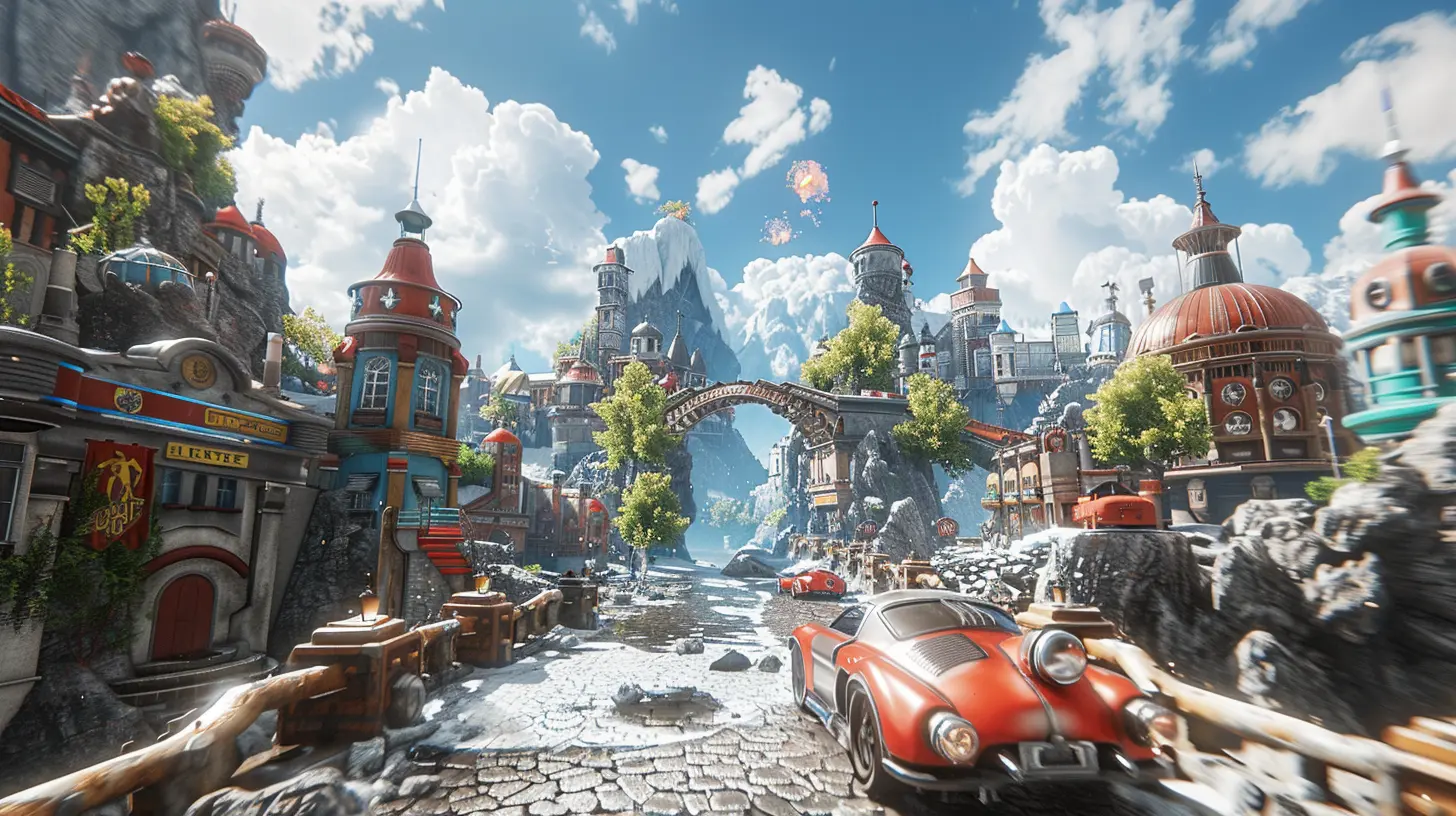
What Even Is Game Physics?
Before we geek out about Unreal, let’s quickly touch on what game physics even means. Simply put, game physics is about simulating the laws of the real world (and sometimes bending them) inside a game.Gravity? Check. Friction? Yep. Momentum, force, collisions, soft-body dynamics? You got it.
Now, not all games need hyper-realistic physics. Some, like platformers or shooters, prioritize gameplay over realism. But when a game does aim for immersion—something that feels close to the real world—physics seriously matters.
Think of physics as the invisible puppeteer. You don’t always see it, but wow, you’d notice if it disappeared.
Unreal Engine: The Tech Powerhouse Behind So Many Hits
Let’s get this straight—Unreal Engine didn't just stroll onto the stage. It burst in like a rockstar with a jetpack.Developed by Epic Games, Unreal Engine has been around since the late ’90s. But the real turning point came with Unreal Engine 4 and now, with the jaw-dropping Unreal Engine 5, it's gone next-level.
Why do so many AAA studios, indie devs, and even filmmakers choose Unreal? Because it offers ridiculous power, flexibility, and yes, mind-blowing physics systems.
Physics Starts With the Foundation: Chaos Physics Engine
You can't talk about Unreal’s dominance in game physics without mentioning its Chaos Physics engine.So... What’s Chaos?
Chaos is Unreal’s built-in physics and destruction system that gives developers the tools to create insanely detailed simulations. Want buildings that collapse realistically, glass that shatters differently each time, or vehicles with suspension that responds to terrain? Chaos can handle all that. And it does it with style.Imagine trying to knock over a Lego tower. Some pieces might fly far; others might just tumble. Chaos captures that unpredictability and makes it feel real.
Real-Time Destruction: Because Who Doesn’t Love Blowing Stuff Up?
Let’s be honest—watching stuff explode in video games is fun. But what makes it satisfying is how natural it looks. And that’s where Unreal shines.With Chaos, developers can simulate real-time destruction that responds dynamically. No more fake "pre-baked" explosions. In Unreal, destruction is calculated on the fly. That means each explosion, crack, or crumble feels organic and unique.
Let’s say you’re in a shooter and lob a grenade at a wall. In an Unreal game, that wall won’t just vanish. It might chip, crack, and blast apart based on the exact position, angle, and force.
This isn’t just cool—it’s immersive.
Rigid and Soft Body Physics: The Best of Both Worlds
Games built with Unreal Engine can effectively simulate both rigid bodies (solid objects like crates or doors) and soft bodies (squishy things like jelly, clothing, or character skin).Rigid Bodies Done Right
Rigid body physics are essential for objects that don't bend or stretch. Unreal handles them with pinpoint accuracy. Think crates tumbling down stairs or bullets ricocheting off metal—all governed by real-world principles.Soft Body Simulation? Unreal Nails That Too
Now think soft—like the way a character’s clothes flap while running, or how a rubber ball deforms when it hits the ground. With Unreal Engine’s physics systems, developers can create all that without bringing in a truckload of extra tools.It's like turning a mannequin into a living, breathing person. Kind of spooky—but super impressive.
Fluid, Smoke, and Cloth Physics: Making the Virtual World Feel Tangible
Unreal Engine doesn’t stop at objects. It brings movement to elements you don’t even touch directly.Water and Fluid Dynamics
Unreal’s water simulation isn’t just for show. Rivers can flow with current, react to wind, and splash when objects break the surface. That tiny detail? It adds buckets of realism.Smoke and Particle Effects
Ever played a game where an explosion left a thick cloud of smoke, and then watched it move with the wind or disperse? Unreal enables that too. These aren’t just 2D overlays—they’re volumetric, 3D simulations.Cloth Physics: Look at That Cape Flow!
From superhero capes to medieval tunics, Unreal’s cloth simulation ensures that fabric responds naturally to movement and environment. No more stiff static clothing—characters finally look like they’re part of the world they're saving (or destroying).Vehicles and Terrain Interaction: Off-Roading Never Felt So Real
Driving physics in Unreal Engine feels like a dream—especially if developers take full advantage of the built-in systems.Want to make a buggy bounce on sand dunes or a muscle car drift in the rain? Unreal lets developers mix terrain types, tire friction, suspension dynamics, and more in real-time.
And when your tires hit a puddle and the splash arcs just right across the screen? That's the Unreal magic.
Interactivity and Physics-Based Gameplay: More Than Just Eye Candy
Here’s what sets Unreal apart—it doesn’t just use physics for aesthetics. The physics are deeply tied into gameplay mechanics.Ever move objects to solve a puzzle in a game? Or use physics to create chain reactions? Unreal’s Blueprint system makes all of that easier.
Blueprints, Unreal’s visual scripting language, lets creators design complex interactions without writing a single line of code. Want a boulder to roll when a lever’s pulled? You can set that up in minutes.
And guess what? Since it’s all governed by the Chaos engine, the results feel real and unpredictable—just like in the real world.
Scalability and Real-Time Performance: Next-Level Optimization
"All these features must make the game heavy to run, right?" Not necessarily.One of Unreal’s superpowers is scalability. Whether you’re playing on a next-gen console, a high-end PC, or even a mobile device, Unreal Engine optimizes game physics to match the platform's power.
This scalability ensures smooth performance without sacrificing immersion. It’s like having a car that adjusts its engine based on the road it’s on. Smart, right?
Unreal Engine 5: The New Era of Realism
Unreal Engine 5 takes everything we’ve talked about and adds a layer of sorcery.Nanite and Lumen
While Nanite focuses on rendering billions of polygons, Lumen handles dynamic lighting. But what’s truly wild? Physics-driven reactions now integrate better with light and shadow. Blow up a wall, and sunlight can now realistically pour through the gap.Enhanced Chaos Integration
UE5 deepens its integration with Chaos, giving more tools and power to developers. There’s even better support for real-time physics simulations and more realistic character movement.The bottom line? UE5 makes it way easier for developers to create hyper-realistic, deeply immersive worlds—without needing a PhD in physics.
Examples of Unreal Physics in Action
Still not convinced? Here are just a few games where Unreal’s physics steal the spotlight:- Fortnite – Yes, it’s cartoony, but pickaxe a structure and watch the physics work in real-time.
- Gears 5 – Those explosions? That debris? All beautifully orchestrated by Unreal’s physics engine.
- The Matrix Awakens Demo – Hands down one of the best showcases of what UE5 and Chaos can do. Watch the city crumble around you in jaw-dropping detail.
Final Thoughts: Unreal Physics Are the Real Deal 💥
Unreal Engine isn’t just a game engine—it’s a physics engine that makes virtual worlds feel tangible. It’s the hidden force behind the realism we take for granted in modern games.Whether it’s a crate falling just the right way, or a building collapsing differently every time, Unreal’s physics aren’t just about looking good—they’re about feeling real.
And with every new version, Epic Games keeps raising the bar.
So, next time you're immersed in a game and everything just feels... right? Now you know who's pulling the strings behind the curtain.
all images in this post were generated using AI tools
Category:
Unreal Engine GamesAuthor:

Leif Coleman
Discussion
rate this article
3 comments
Sasha Cannon
Insightful analysis on Unreal Engine!
April 22, 2026 at 4:20 PM
Leif Coleman
Thanks for your support! I'm glad you found the analysis valuable.
Daria McClure
Unreal Engine revolutionizes game physics with realistic simulations, enhancing immersion and gameplay quality in gaming experiences.
February 12, 2026 at 5:57 PM
Leif Coleman
Thank you for your insightful comment! Unreal Engine indeed raises the standard for game physics, creating unparalleled immersion and enhancing overall gameplay quality.
Blaine McKnight
Unreal Engine truly revolutionizes game physics!
February 12, 2026 at 4:06 AM
Leif Coleman
Thank you! Unreal Engine does indeed push the boundaries of game physics, creating incredibly immersive experiences for players.