What Unreal Engine Brings to Open-World Game Design
14 September 2026
So let’s have a real talk about open-world games. You’ve probably wandered through the vast stretches of Hyrule in Breath of the Wild, roamed the Wild West in Red Dead Redemption 2, or driven through neon-lit cities in Cyberpunk 2077. But have you ever wondered—how do developers even build worlds that massive, detailed, and immersive?
Well, one game engine has made a name for itself in that exact space — Unreal Engine.
In this post, we're diving deep into what Unreal Engine brings to the table for open-world game design. Whether you're a game dev, a gamer, or just a curious soul wondering “What’s under the hood?”, you’re in the right place.
Let’s unpack it all—the magic, the mechanics, and the mountains Unreal Engine moves to make your favorite open worlds possible.
What is Unreal Engine, Really?
Before we geek out, let’s keep it simple. Unreal Engine is a game engine developed by Epic Games. It’s the digital toolbox that powers tons of blockbuster games, including Fortnite, Gears of War, and yes, many expansive open-world titles.Unreal Engine 5, the latest major version, has turned heads across the industry. Why? Because it’s not just an upgrade—it feels like a revolution. With features like Nanite (a virtualized geometry system) and Lumen (a global illumination system), the tools are sharper than ever.
But the real magic happens when this power gets channeled into open-world development.
The Challenge of Building Open Worlds
Creating an open world isn’t just about making a big map. That’s the easy part. The real challenge? Making it feel alive, immersive, and seamless.Developers have to think about:
- Level streaming (how to load areas without breaking immersion)
- AI behavior across large zones
- Lighting that changes naturally
- Realistic environments without tanking performance
- Dynamic weather, fauna, ecosystems
- Player choices that have long-reaching consequences
That’s a lot on one plate. And it’s where Unreal Engine steps in like a superhero with a utility belt full of high-tech gadgets.
Powerhouse Features of Unreal Engine for Open-World Games
Let’s break down what exactly Unreal Engine brings to open-world design—and trust me, it’s game-changing stuff.1. Nanite: Virtual Geometry That’s Insane
With Nanite, Unreal Engine 5 lets developers import film-quality 3D assets directly into the game without sacrificing performance.That cliff you’re staring at? It could have millions of polygons and still run silky smooth. Nanite takes care of the scaling and optimization on-the-fly. So devs can focus more on creativity and less on crunching numbers.
For open-world games, this is gold. You get environments that are richly detailed and massive—without frying your GPU.
2. Lumen: Real-time Lighting That Breathes Life Into Worlds
Open worlds feel real when light behaves naturally—sunsets fading into twilight, torchlight flickering in caves, moonlight casting soft shadows across a field.Lumen provides dynamic global illumination and reflections that respond in real-time to changes in a scene. No more baking lights for hours. For developers, this is a game-changer.
Why does that matter to players? Simple—it’s the difference between “meh” visuals and jaw-dropping immersion.
3. World Partition: Smart Level Streaming
Remember the days of walking into a new area and watching the screen freeze as it loaded? Yeah, those days are numbered.World Partition is Unreal Engine 5’s answer. It automatically divides the game world into a grid and streams in only the assets that are nearby. The result? Massive, open-world maps that load seamlessly as the player moves.
No loading screens. No clunky transitions. Just silky exploration.
4. One File, Many Hands: Collaborative Editing
Open-world games take teams—massive ones. Unreal Engine’s collaborative editing lets multiple devs work on the same world simultaneously.So while one artist tweaks the vegetation in the jungle, another can be optimizing AI pathing in the mountains—without stepping on each other’s toes.
This leads to faster development cycles and fewer bottlenecks. Perfect for large-scale worlds.
5. MetaHuman: Realistic Characters Without the Guesswork
What’s a rich world without believable characters?MetaHuman Creator lets devs build incredibly realistic human characters in record time. Facial features, hair, clothing—it’s all customizable and insanely lifelike.
In an open-world RPG, where you might chat with hundreds of NPCs, this makes a huge difference. It elevates immersion and makes each encounter feel personal.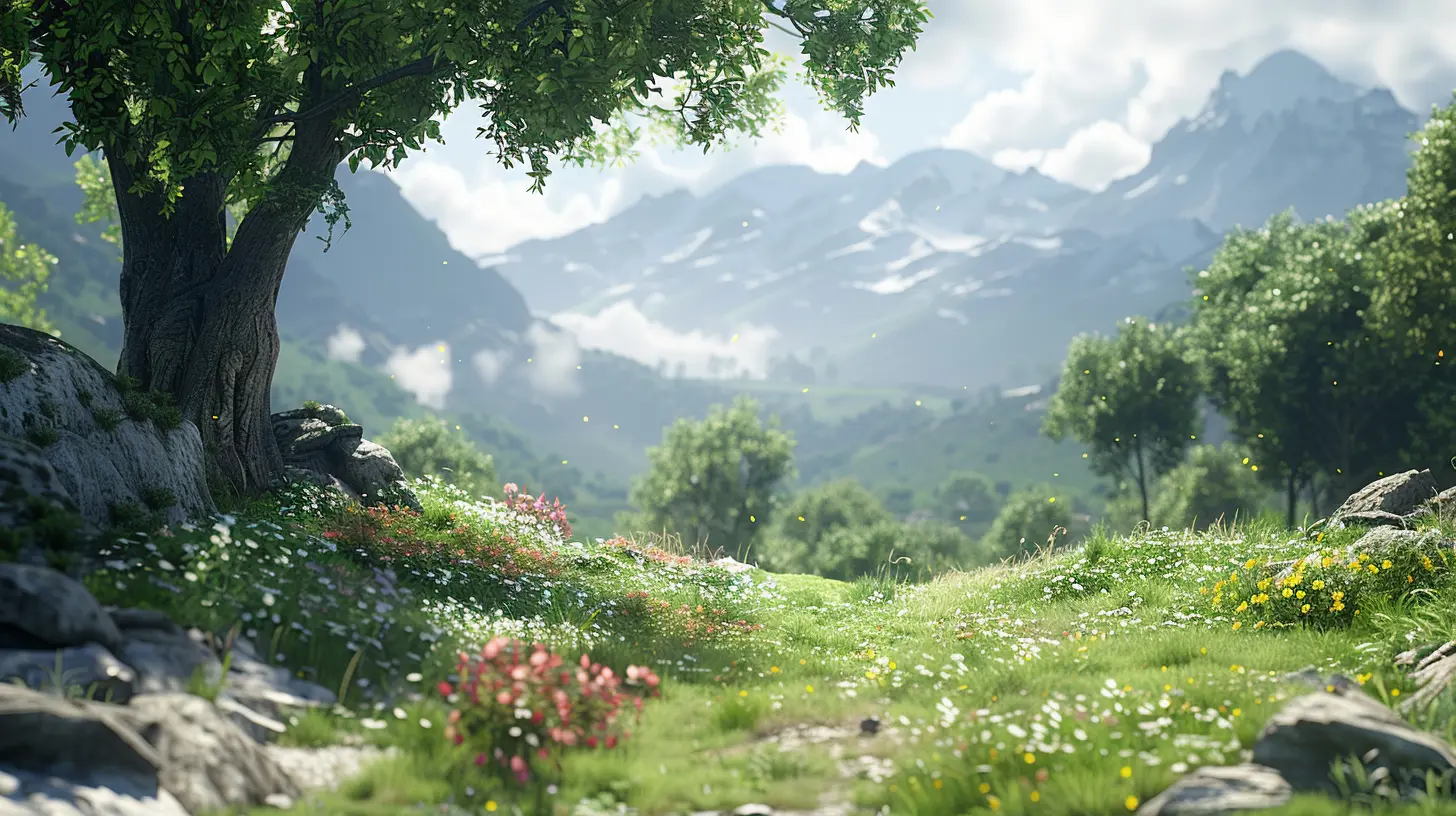
Real-World Examples of Unreal Engine in Open-World Games
Let’s look at how some iconic games have leveraged Unreal Engine to create unforgettable open-world experiences.?️ Days Gone (PS4)
Built on Unreal Engine 4, Days Gone offers a sprawling post-apocalyptic setting with dynamic weather, day-night cycles, and hordes of zombies roaming the land.The engine allows for seamless transitions between exploration, combat, and story-telling—something that’s crucial in a survival game.
? Outer Worlds
Obsidian’s The Outer Worlds also runs on Unreal Engine, delivering vibrant alien planets filled with branching stories and detailed environments.The game proves you don’t need a gargantuan map—just a well-crafted one powered by strong tools.
?S.T.A.L.K.E.R. 2: Heart of Chernobyl
This upcoming title runs on Unreal Engine 5 and promises a genuinely horrific yet stunning open-world environment.Expect gritty visuals, smart AI, and a highly immersive world—all thanks to UE5’s powerful rendering and streaming capabilities.
Unreal Engine Doesn’t Just Help Developers—It Benefits Players Too
Let’s flip the script. As players, what do we actually get out of all this technological wizardry?✔ Smooth Gameplay
Better performance optimization means fewer bugs, crashes, or frame dips—even in massive worlds.✔ Immersive Environments
Thanks to Nanite and Lumen, every rock, shadow, and ripple in the water looks more lifelike.✔ Faster Game Releases
Collaborative tools and efficient dev workflows mean studios can release polished content faster. You wait less, and play more.✔ Deep Storytelling
With tools like MetaHuman and Blueprint Visual Scripting, devs spend less time on grunt work and more on crafting compelling stories and characters.Unreal Engine vs. Other Game Engines
Okay, but let’s be fair—what about Unity or CryEngine?While each engine has its strengths, Unreal often stands out when it comes to large-scale, high-fidelity open worlds.
| Feature | Unreal Engine 5 | Unity | CryEngine |
|------------------------|------------------------|---------------------------|--------------------------|
| Visual Quality | High-end AAA | Moderate | High-end AAA |
| Ease of Use | Moderate | Easy | Steep learning curve |
| Asset Streaming | Built-in World Partition | Manual setup | Manual setup |
| Lighting | Lumen (Dynamic GI) | Requires plugins | Good, but not Lumen-level|
| Collaboration Support | Native Multi-User Editing | Limited | Limited |
| Asset Import | Nanite | LOD-based, more manual | LOD-based |
Simply put—Unreal Engine is built to tackle the challenges that come with open-world design. It’s not the only option, but it’s arguably the most complete package today.
The Future of Open-World Design with Unreal Engine
We’re standing at the edge of a new frontier. With every Unreal Engine update, the line between reality and virtual worlds gets blurrier.Here’s what we can look forward to:
- More dynamic, living worlds – Think wildlife that reacts naturally to human behavior, or ecosystems that shift over time.
- Real-time world-building and player interaction – Imagine contributing to the game world as you play.
- Photorealistic graphics across all platforms – Including mobile and VR.
- Procedural content generation – So every world can feel truly unique.
As Unreal Engine continues to evolve, so too will the scale and depth of the worlds it helps create. And honestly? That’s great news for anyone who loves getting lost in a beautifully crafted game universe.
Final Thoughts
It’s clear that Unreal Engine is not just a “tool” for open-world game design—it’s practically a co-creator. It equips developers with the freedom to imagine anything, the power to build it efficiently, and the polish to deliver it beautifully.For gamers, it means richer, more immersive worlds that respond to their actions, surprise them with every corner turned, and keep them coming back for more.
So next time you get lost in a digital wilderness, or feel the wind rustle through the pixelated trees in your favorite RPG—just remember, Unreal Engine might be the silent hero behind that moment.
all images in this post were generated using AI tools
Category:
Unreal Engine GamesAuthor:

Leif Coleman